Showing posts with label Boat. Show all posts

Thursday, June 12, 2025

Goan Shores: A Fishing Boat's Rest and the Rhythms of the Tide

Goan Shores: A Fishing Boat's Rest and the Rhythms of the Tide

 Goan Shores: A Fishing Boat's Rest and the Rhythms of the Tide

Goan Shores: A Fishing Boat's Rest and the Rhythms of the Tide – Where Simplicity Meets the Sea

There's a certain timeless charm to a quiet beach scene, especially one that hints at the enduring relationship between humans and the sea. The photograph before us captures just such a moment: a traditional fishing boat resting peacefully on the golden sands of a Goan beach, with a delicate line of water tracing its path along the shore, likely the gentle retreat of a recent high tide. It's a scene of tranquility, of work done, and of the constant, soothing rhythm of the ocean.

This isn't a picture of bustling tourist activity or dramatic ocean waves; instead, it offers a more intimate, contemplative glimpse into the daily life and natural beauty of Goa's coastline. It’s an invitation to slow down, to appreciate the simple elegance of a working vessel, and to feel the gentle pulse of the sea.

An Abstract Glimpse: Lines, Textures, and Coastal Hues

Viewed with an abstract eye, the photograph is a beautiful composition of lines, textures, and a soft, sun-bleached palette. The fishing boat itself, positioned prominently in the left foreground, is a strong, dark, angular form. Its high, pointed prow cuts a sharp silhouette against the hazy sky and distant treeline. The rough, weathered texture of its wooden hull speaks of countless journeys and the a_brasi_ve touch of sand and sea. The simple oars resting inside hint at its traditional, manual power.

The beach stretches out in a broad expanse of pale golden sand. Its surface isn't perfectly smooth; it's textured with the subtle imprints of previous waves, footprints (though not clearly defined from this distance), and the gentle undulations shaped by wind and water. The colour of the sand shifts subtly, perhaps darker where it's still damp from the receding tide.

thin, meandering line of water cuts a delicate, curving path across the sand, parallel to the main shoreline. This is likely the high tide mark or a small channel carved by the retreating waves. Its surface reflects the soft light of the sky, creating a ribbon of brightness that contrasts with the duller sand. Tiny, colourful objects – perhaps children’s beach toys or discarded items – are visible within this waterline, adding small, unexpected points of interest and a touch of human presence.

In the distance, the main body of the Arabian Sea stretches out, its surface a hazy blend of blues and greys under a soft, overcast or perhaps slightly misty sky. Gentle waves with white crests can be seen breaking further out. Another, smaller fishing boat, marked with a tiny red flag, is visible further down the beach, a distant echo of the one in the foreground, adding a sense of scale and continuity.

The far background is a line of lush green palm trees and other coastal vegetation, forming a soft, verdant border between the beach and the unseen land beyond. Their feathery tops create a gentle, slightly blurred texture against the pale sky.

From an abstract perspective, this image is about:

  • Leading Lines: The shoreline, the waterline, and the angle of the boat all draw the eye into the scene and towards the horizon.

  • Contrast of Textures: The roughness of the boat's wood, the granularity of the sand, the smoothness of the water, the softness of the distant trees.

  • Subtle Colour Harmonies: The earthy browns and golds of the sand, the muted blues and greys of the water and sky, the dark silhouette of the boat, and the distant green of the palms.

  • Stillness and Motion Implied: The boat is at rest, yet it's a vessel of motion. The waterline hints at the constant movement of the tide.

  • Human Imprint on Nature: The boat, the toys – signs of human life within a natural coastal setting.

It’s a scene that evokes a sense of peace, the quiet aftermath of activity, and the enduring, patient presence of the sea. It feels like a moment caught between tides, between work and rest.

The Goan Fishing Boat: A Lifeline for Coastal Communities

The type of boat seen in the photograph is characteristic of the traditional fishing vessels used by local fishing communities along the Goan coast and other parts of India. These are not large, industrial trawlers but smaller, often wooden, boats designed for near-shore fishing.

  • Design and Construction:

    • Wooden Hull: Traditionally built from local woods known for their durability in saltwater. The construction methods are often passed down through generations of boat builders.

    • Pointed Prow and Stern: This classic design helps the boat cut through waves efficiently. The high prow, as seen in the image, is typical and helps in navigating choppier waters.

    • Outriggers (Sometimes): While not clearly visible on this specific boat, some traditional Goan fishing boats employ outriggers (a projecting frame attached to the side) for added stability, especially when using sails or in rougher seas.

    • Propulsion: Many such boats are still propelled by oars (as suggested by the ones visible in the boat) or by small outboard motors. Some might also use simple sails when conditions are right.

  • Usefulness to Local Fishing Folk:

    • Livelihood: For generations, these boats have been the primary tool for countless fishing families, providing their main source of income and sustenance. They are integral to the local economy and culture of coastal villages.

    • Near-Shore Fishing: They are ideal for fishing relatively close to the coast, targeting species like mackerel, sardines, pomfret, prawns, and crabs.

    • Versatility: Used for various fishing techniques, including gillnetting, line fishing, and sometimes small-scale trawling.

    • Accessibility: Their smaller size allows them to be launched and beached directly from the shore, without needing deep-water harbours, which is crucial for many smaller fishing villages.

    • Knowledge and Tradition: The operation of these boats is often tied to deep traditional knowledge of local waters, currents, fish behaviour, and weather patterns, passed down through families.

These boats are more than just vessels; they are symbols of a way of life, of resilience, and of a deep connection to the sea. They represent the hard work and skill of the local fisherfolk who venture out daily to bring back the ocean's bounty.

The Beach and the Thin Water Line: Rhythms of the Tide

The beach in the photograph, with its expanse of sand and the delicate waterline, tells a story of coastal dynamics.

  • Goan Beaches: Goa is world-famous for its beautiful beaches, which stretch along its coastline. They vary from bustling tourist hotspots to quieter, more secluded stretches. The beach in the image appears to be one of the more tranquil ones, perhaps a fishing village beach or a less commercialized area.

  • The Thin Water Line (High Tide Mark/Receding Tide):

    • The meandering line of water running parallel to the main surf is a common feature on gently sloping beaches. It most likely represents the highest point the tide reached recently (the high tide mark), with the water now receding.

    • Alternatively, it could be a shallow channel or runnel formed as the last vestiges of the tide drain back towards the sea, or even a small freshwater streamlet meeting the ocean.

    • What it Signifies:

      • Tidal Rhythms: It's a visual reminder of the constant ebb and flow of the tides, a twice-daily cycle governed by the gravitational pull of the moon and sun. This rhythm dictates the lives of coastal communities, especially fisherfolk, who often time their departures and arrivals with the tides.

      • Ephemeral Art: These temporary waterlines create beautiful, ever-changing patterns on the sand, nature's own delicate etchings.

      • Zone of Life: The intertidal zone (the area between high and low tide marks) is a rich habitat for various small marine creatures like crabs, shellfish, and sandhoppers, which are in turn food for birds.

      • A Playground: As evidenced by the colourful toys, this area is often where children play, building sandcastles and paddling in the shallow water as the tide goes out.

The presence of this waterline adds a sense of dynamism to the otherwise still scene, hinting at the constant movement and life of the shoreline.

A Scene of Quiet Repose and Anticipation

The overall atmosphere of the photograph is one of peace and quiet. The fishing boat is beached, suggesting its work for the day might be done, or it's awaiting the next suitable tide or time to venture out. The few figures in the distance and the scattered toys hint at recent human activity, but the immediate scene around the boat is one of stillness.

  • The Fisherman's Rest: For the local fisherfolk, the beached boat represents a temporary reprieve from the demanding work at sea. It's a place to mend nets, prepare for the next trip, or simply rest.

  • Awaiting the Next Journey: There's also a sense of anticipation. The boat, though resting, is poised for action, ready to return to the embrace of the waves when the time is right.

  • The Enduring Coastline: The backdrop of palm trees and the distant ocean speaks of an environment that has sustained this way of life for centuries. The gentle lapping of waves, the cry of seabirds (though unseen), and the salty air are all part of this timeless coastal narrative.

Goa: Beyond the Famous Party Beaches

While Goa is often associated with bustling tourist beaches, parties, and vibrant nightlife, this image reminds us of another, equally important facet of Goan life: its traditional fishing communities and its quieter, more natural stretches of coastline.

  • A Rich Maritime History: Goa has a long and storied maritime history, influenced by indigenous rulers, Portuguese colonization, and centuries of trade. Fishing has always been a cornerstone of its coastal economy and culture.

  • The Importance of Sustainable Fishing: Today, like many coastal regions worldwide, Goa faces challenges related to sustainable fishing practices, overfishing, and the impact of tourism on traditional livelihoods. Supporting responsible, local fishing is crucial.

  • Exploring Goa's Diverse Coastline: Travellers to Goa can find a wide spectrum of beach experiences. While North Goa is known for its lively beaches, South Goa often offers more tranquil, secluded stretches where scenes like the one in the photograph are more common. Exploring these less-crowded beaches can provide a more authentic glimpse into local Goan life.

Connecting with the Scene: A Traveller's Perspective

For a traveller, encountering a scene like this can be a moment of connection:

  • Appreciation for Local Livelihoods: It offers a glimpse into the daily lives and hard work of the local fishing community.

  • A Sense of Peace: The quiet beach, the resting boat, and the gentle sound of the waves can be incredibly calming and restorative.

  • Photographic Opportunity: The interplay of colours, textures, and the timeless subject matter make for beautiful photographs.

  • A Reminder of Simple Beauty: In a world often focused on grand attractions, scenes like this highlight the beauty in simplicity and the enduring charm of traditional ways of life.

This photograph isn't just a pretty picture of a boat on a beach. It's an invitation to appreciate the rhythms of coastal life, the skill of traditional fisherfolk, the constant dance of the tides, and the simple, profound beauty that can be found in a quiet moment by the sea in a place like Goa. It’s a reminder that even in popular tourist destinations, there are still pockets of authenticity and tranquility waiting to be discovered.


Image Usage & Products:

Thank you for appreciating this photograph capturing a traditional fishing boat on a serene Goan beach. I feel this image evokes a sense of peace, tradition, and the timeless beauty of coastal India.

If you are interested in using this photograph for stock purposes – perhaps for travel articles, websites promoting Goa, cultural features, or as a calming background image – or if you would like to see this image transformed into a beautiful poster, a thoughtful greeting card, a canvas print to bring a touch of the coast to your home, a t-shirt, or other custom merchandise, I would be delighted to discuss the possibilities with you.

Please feel free to reach out by leaving a comment below this blog post. I will get back to you promptly to explore your specific requirements and how this image can best serve your project or help you share the tranquil charm of Goa's shores.

Want to improve your photos? Buy Photoshop and see how your images come to life. Click to buy.

Want to get tips for improving your photography ? Get Photo Tips from this blog.

Monday, May 12, 2025

Floating Grocery Store: A Shikara Full of Supplies on Dal Lake, Srinagar

Floating Grocery Store: A Shikara Full of Supplies on Dal Lake, Srinagar

 Floating Grocery Store: A Shikara Full of Supplies on Dal Lake, Srinagar

Groceries on the Lake: A Floating Market on Dal Lake, Srinagar

In a world driven by apps and doorstep delivery, the image captured above offers a refreshingly traditional take on modern convenience. It shows a shikara, a handcrafted wooden boat in Kashmir, fully stocked with brightly colored grocery items, floating peacefully across the serene waters of Dal Lake in Srinagar. This floating shop is part of an extraordinary local system of mobile markets that bring daily needs right to the doorsteps of residents—many of whom live on houseboats or lakeside homes.

This scene is not just beautiful; it’s a story of adaptation, community, and culture, blending practicality with poetry in motion.

Let’s take a closer look at the image, its unique cultural context, and how this floating commerce reflects both heritage and ingenuity.


The Picture: A Boat Brimming with Life

At first glance, the image is cheerful and vibrant. The wooden shikara moves gently through the water, its blue paddle slicing through gentle ripples. At the helm, a vendor in a black jacket carefully navigates while surrounded by boxes, packets, and crates—each brimming with snacks, juices, chips, and essential groceries. Nestled neatly within the covered portion of the boat are brands recognizable to any urban shopper: bottled drinks, cartons, biscuits, and colorful wrappers peeking out.

The image has depth: behind the grocery boat lies a panorama of traditional Kashmiri wooden homes, houseboats, and more shikaras scattered across the water, with snow-capped Himalayan peaks providing a majestic backdrop. The mixture of human activity, architecture, and natural beauty makes this image more than just documentation—it’s living culture on display.


Abstract Appeal for Visual Enthusiasts

From an abstract and artistic standpoint, the image plays beautifully with perspective and symmetry. The boat draws the eye into the frame, naturally directing attention from the present moment in the foreground to the historical richness in the background.

There’s a delightful juxtaposition of stillness and motion—the calm of the water surface broken only by the ripple of the paddle, the tranquility of the mountains watching over the busyness of commerce. It’s a visual poem where tradition meets utility.

Even the layout of goods—organized yet chaotic in their colors—creates an image that appeals to photographers, painters, and designers. It’s the kind of photograph that tells a thousand stories without saying a word.


The Dal Lake: Jewel of Kashmir

The boat floats on one of the most iconic landmarks of Kashmir—Dal Lake. Often referred to as the “Jewel in the crown of Kashmir,” Dal Lake is more than a picturesque tourist attraction. It is an ecosystem of life, livelihood, and legacy.

Located in Srinagar, the summer capital of Jammu and Kashmir, the lake spans over 18 square kilometers and is home to a unique network of floating gardens, houseboats, schools, and floating vendors. Families have lived on the water for generations, building lives that sway with the rhythms of the lake.

The lake is lined with wooden houses, many built on stilts, and others anchored to the shores. Many of these homes are inaccessible by road, making the shikara an essential mode of transport—not just for people, but for goods too.


Shikara: The Traditional Water Taxi of Kashmir

The shikara is to Srinagar what gondolas are to Venice. Traditionally carved from deodar wood and designed with a distinctive upward curve at the ends, these boats are a symbol of Kashmiri craftsmanship and hospitality.

Most tourists know shikaras as the romantic boats decorated with canopies and cushions, offering scenic rides across Dal Lake. But for locals, the shikara is daily life—a means to get to school, to go shopping, to transport vegetables and flowers, and, as this image shows, to run grocery stores on water.

This mobile grocery service is not new. It evolved naturally from the constraints and geography of lake life. Over the years, it has become a trusted system of home delivery, long before mobile apps ever thought of the idea.


Groceries on Water: More Than Just Delivery

These floating shops are part of a charming tradition. Each morning, vendors load their boats with goods sourced from city markets and navigate from houseboat to houseboat, calling out to families with their regular offerings.

This form of commerce is both personal and efficient. Customers don’t just buy—they chat, negotiate, ask about fresh arrivals, and catch up on local news. It’s an experience, not just a transaction.

And unlike supermarkets, these boats often allow people to buy in small quantities, offer trusted brands, and deliver essentials right at the edge of the veranda—an incredibly helpful service for the elderly, the sick, or families staying long-term on houseboats.


Blending Heritage with Necessity

What makes this system so special is how it blends necessity with culture. In a place that sees harsh winters, limited mobility, and seasonal tourism, such innovations are both brilliant and rooted in tradition.

This scene could be from a hundred years ago or from yesterday. It reminds us that modernity does not always mean machines. Sometimes, the most efficient systems are born of local wisdom, environmental adaptation, and social trust.


Famous Floating Markets Around the World

While Kashmir’s shikara grocery boats are relatively lesser-known, other floating markets have become tourist magnets. Some notable ones include:

  • Damnoen Saduak in Thailand – A vibrant floating market full of produce, crafts, and street food.

  • Lok Baintan in Indonesia – One of the oldest river markets.

  • Can Tho in Vietnam – Where boats are packed with melons, coconuts, and pineapples.

  • Amazon river markets in Brazil – Serving the most remote communities in the rainforest.

What makes the Dal Lake version unique is its small scale and strong human connection—you’re not just a customer, you’re part of a floating neighborhood.


Why This Image Stands Out

Visually, this image holds timeless appeal. The interplay of water, color, activity, and architecture makes it suitable for:

  • Wall art or canvas prints with cultural themes

  • Travel magazines or tourism blogs

  • Documentaries and editorials on sustainability and local markets

  • Lifestyle products such as tote bags, mugs, calendars

  • Greeting cards that capture unique traditions

The image is rich in story, color, and emotion. It speaks not just to travelers, but also to artists, marketers, storytellers, and entrepreneurs.


Interested in Using This Image?

If you’d like to use this image for stock purposes, editorial articles, digital marketing, or merchandise, please reach out via comments.

I can provide:

  • High-resolution, watermark-free files

  • Licensing options for one-time or bulk usage

  • Custom prints for posters, t-shirts, greeting cards, and home decor

  • Collaborations for travel content, storytelling, or visual campaigns

Just leave a message, and I’ll personally get back to you with the best options.


Final Thoughts: More Than a Picture

This photo of a floating grocery boat on Dal Lake is not just a picture—it is a window into a different way of life. A life where delivery comes by water, where tradition meets need, and where community thrives despite geography.

In an increasingly digital world, this floating store reminds us that human ingenuity doesn’t always need innovation—it sometimes just needs a paddle and a boat full of essentials.

Want to improve your photos? Buy Photoshop and see how your images come to life. Click to buy.

Want to get tips for improving your photography ? Get Photo Tips from this blog.

Monday, April 28, 2025

Sailing Through Time: A Sailboat on San Francisco’s Gentle Waters

Sailing Through Time: A Sailboat on San Francisco’s Gentle Waters

 Sailing Through Time: A Sailboat on San Francisco’s Gentle Waters

A lone sailboat cuts silently through the shimmering waters of San Francisco harbor.
The sails are tall, crisp against a soft grey backdrop of coastal houses and misty hills.
The boat leans slightly into the breeze, the ripples fanning out behind like whispers on the surface.

It is a simple, timeless image—one that captures the spirit of freedom, exploration, and quiet moments spent adrift between sky and sea.


The Joy of Sailing: Freedom on the Water

There is a unique joy in sailing. Unlike the engine’s roar or the hustle of crowded beaches, a sailboat moves with the wind’s will. The pace is slow, deliberate. You become a part of the rhythm of nature.

On a day like the one in the image, a few hours aboard a sailboat is enough to dissolve worries.
The sun plays off the water. The boat rocks gently. The only sounds are the flutter of canvas, the creak of wood, and the soft hiss of water against the hull.

Sailing isn’t about speed. It’s about surrendering to the elements—and in return, finding peace.


A Brief Journey Through the Evolution of Boats

Boats have been humanity’s partners since the dawn of civilization.

  • Ancient rafts made of bundled reeds helped early humans cross rivers.

  • Wooden canoes carved by Native Americans and Pacific Islanders allowed exploration across vast oceans.

  • Medieval ships with billowing sails connected continents, carried explorers like Columbus, and opened new worlds.

  • Steamships and later motorboats revolutionized travel, trade, and warfare.

Today, boats are no longer just a means of survival or commerce.
They are symbols of leisure, luxury, and personal freedom.

The sailboat in this image is a descendant of a long, proud lineage—where simple materials, wind, and water come together to tell a story of adventure and connection.


Sailboats Today: The Art of Leisure

Modern sailboats come in all shapes and sizes—from nimble dinghies to luxurious yachts.
But at their core, they carry the same spirit: moving with the wind, working with nature instead of against it.

Sailing offers:

  • Relaxation: Hours spent gliding over water under open skies.

  • Adventure: Testing your skill against changing winds and currents.

  • Connection: Time spent with family or friends, uninterrupted by screens or noise.

  • Mindfulness: Being fully present in the moment, adjusting to the subtle shifts of breeze and tide.

A harbor like San Francisco’s is a perfect place for it.
Protected from the rougher waves of the open Pacific, yet kissed by steady winds, the waters here offer sailors a playground where each trip feels new.


San Francisco Harbor: A Meeting of History and Nature

San Francisco’s harbor is more than just a body of water—it’s a living museum of the city’s rich past.

  • Once crowded with ships during the Gold Rush.

  • Later a hub for immigrants, merchants, and the U.S. Navy.

  • Today, it welcomes ferries, cargo vessels, fishing boats, and pleasure crafts alike.

Sailing here connects you not just to the natural beauty of the bay but also to the heartbeat of a city built on boldness and dreams.

From the deck of a sailboat, you can see the city’s skyline rising like a mirage.
You can pass Alcatraz Island, hear the distant clang of buoys, and feel the pulse of history mingling with the ocean breeze.


The Magic of Sail and Sky

There is something almost abstract in the way a sailboat frames itself against the sky.

  • The sharp triangle of white sail.

  • The steady vertical line of the mast.

  • The blurred, dreamy backdrop of distant hills and clustered homes.

Together, they create a composition that feels both still and alive.
Like a moment suspended between movement and memory.

For those who appreciate abstract images, this sailboat isn't just a vessel—it’s a metaphor:
A tiny island of humanity carried by forces unseen, steered by skill, trust, and the willingness to journey.


From Transport to Passion: How Boats Changed Purpose

Historically, boats were survival tools:

  • Fishing boats brought food to villages.

  • Trading vessels carried spices, silks, and treasures across oceans.

  • Warships defended nations and projected power.

But over centuries, boats became something more.
Today, many people sail not because they must—but because they love to.

Sailing has evolved into:

  • A sport: Racing events like the America’s Cup push the limits of design and seamanship.

  • A lifestyle: Some people live on sailboats, drifting from harbor to harbor.

  • A meditation: A way to unplug, reset, and reconnect with the raw elements.

The simple act of raising a sail, catching the wind, and moving forward is as close to flying as most of us will ever come.


Closing Reflection

In the end, the sailboat in this image reminds us of something profound:
That progress doesn’t always have to be noisy. That moving forward can be as soft as a breeze and as gentle as a ripple.

Whether for travel, sport, or sheer joy, the story of sailing is the story of listening—to water, to wind, and to oneself.

And sometimes, the best journeys aren’t measured in miles or knots, but in the moments of quiet wonder found between shore and horizon.

Want to improve your photos? Buy Photoshop and see how your images come to life. Click to buy.

Want to get tips for improving your photography ? Get Photo Tips from this blog.
Friday, November 16, 2018

Dusk at the harbour - Print by Saatchiart

Dusk at the harbour - Print by Saatchiart
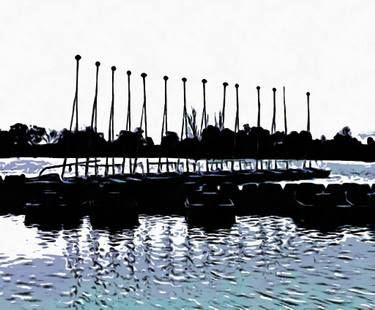
A view of sailboats at the pier. These sailboats provide a lot of pleasure to the owners, since during the day, going out on the lake with the sailboat is a way of relaxation, to get some time off. But at night, when light on the lake is almost gone, and when winds are very much reduced, and most of the owners would be asleep, these sailboats are all at rest. It gives a nice picture, with the masts, the sails having been brought down, all in a row. The reflection, in the low night, but with the water still a bit wavy, gives a nice picture.
If you like this piece of art, or want to view some of my other creations, please check out my other works on my Saatchiart store (link).

Want to improve your photos? Buy Photoshop and see how your images come to life. Click to buy.

Want to get tips for improving your photography ? Get Photo Tips from this blog.

Saturday, November 10, 2018

Boat full of visitors in Belgium - Saatchiart

Boat full of visitors in Belgium - Saatchiart
Boat full of visitors in Belgium - Saatchiart 
A boat full of visitors on a river tour in Belgium. Tourism is a great economic factor in the progress of a region, since it provides the local economy boost through the boost to local hotels and lodging, shops, the food and drinks industry, as well as those who act as guides to the tourists. The river tours are a big draw here, since they let tourists travel on a easy circuit, avoiding road traffic and getting a view of the architecture and other attractions on the route. Most cities that have rivers or other such water streams passing through their cities or other tourist draws develop the facilities that allow river tourism to attract a number of tourists.
If you want this image in the form of a canvas print or other such wall decoration, please click on this link to buy from Saatchiart.

Want to improve your photos? Buy Photoshop and see how your images come to life. Click to buy.

Want to get tips for improving your photography ? Get Photo Tips from this blog.

Thursday, November 01, 2018

Boats at rest at day end


This is the scene in a tropical paradise that depends on tourism for its economy. A large part of that is the boating part, whether these be glass bottom boats for seeing corals, or for snorkeling. These are some of those boats, now coming to a rest in the water just off the beach, ready to resume activities the next day when there is light and tourists come to enjoy the water.
These however are not dive boats, which tend to be a bit larger, since these need to carry more equipment, and have to travel a bit further out so that they can reach somewhat deeper waters.

If you want a print of this image, then click on this link

Want to improve your photos? Buy Photoshop and see how your images come to life. Click to buy.

Want to get tips for improving your photography ? Get Photo Tips from this blog.

Wednesday, April 10, 2013

Ships in the Ras Mohammed protected marine park near Sharm el Sheikh in Egypt

Tourist ship in Sharm el Sheikh, full of tourists enjoying the trip

Tourist ship in Sharm el Sheikh, full of tourists enjoying the trip

The waters around the tourist town of Sharm el Sheikh (located on the southern tip of the Sinai Peninsula in Egypt) are full of these ships, especially in the winter months. The waters around Sharm el Sheikh see a large number of tourists, because of the temperate weather of the area (especially when many areas of the world are freezing in brutal winter temperatures) and also to see the coral formations in the area which are famous for offering tourists the option of doing either snorkeling or scuba diving. This ship seems so full of tourists, and if you look towards the back of the ship, you can see the oxygen cylinders piled there, needed for scuba diving along with other equipment.


View of a ship carrying tourists a short distance away from Sharm el Sheikh in Egypt

View of a ship carrying tourists a short distance away from Sharm el Sheikh in Egypt

This is an example of the standard small ship, used for carrying tourists from Sharm el Sheikh harbour. Typically, these ships carry tourists to and from the harbour and the Ras Muhamed protected marine park, where they get to see a number of coral formations. These coral formations almost come to the surface of the water and are near the shoreline (atleast for those who prefer snorkeling, such as we did). For those who prefer scuba diving, places are shown with more depth, including coral reefs as well as sunken ships, which are abundant with marine life.


Ship close to the shoreline so that passengers can get access to coral reefs

Ship close to the shoreline so that passengers can get access to coral reefs

This photo shows the ultimate destination of those who use the ships from Sharm el Sheikh to go for snorkeling in coral formations. Here, this ship is inside the region of the Ras Mohammed marine park near Sharm el Sheikh, where there are a number of coral reefs. Many of these are are located fairly close to the shore, and in this photo, you can see a small objects in the water, very close to the shore. These are actually tourists, who are busy snorkeling and who are mostly face down in the water, admiring the coral formations. The ships can come to a safe distance close to the coral formation, so that tourists can get to the reef easily.


Tourist ship at anchor close to a coral reef so that people can get to the coral

Tourist ship at anchor close to a coral reef so that people can get to the coral

In this photo, you can see a small ship inside the Ram Mohammed marine park near Sharm el Sheikh. The park is a protected area with prohibitions on commercial activities which also includes no fishing. Tourism is the key activity in the region, famous for the number of coral formations where which allow people to do snorkeling for those coral near the surface, and scuba diving for those at greater depths. If you look closely at the photo, you can see a person at the rear of the ship, with the flippers showing. There are some structures on the shore and a vehicle (with the structures meant for those visitors who come there over the land route, not over the water).

Want to improve your photos? Buy Photoshop and see how your images come to life. Click to buy.

Want to get tips for improving your photography ? Get Photo Tips from this blog.

Monday, April 01, 2013

A well decorated boat in the waters of Sharm el Sheikh in Egypt

Tourists and locals on a colorful boat at Sharm el Sheikh in Egypt

Tourists and locals on a colorful boat at Sharm el Sheikh in Egypt

Sharm el Sheikh harbour is typically bristling with a large number of ships, mostly of the standard white color. Given the importance of the waters of the Red Sea to the tourist town (including the stretches of coral reefs where a number of tourists indulge in either scuba diving or snorkeling), most tourists to the area do get onto the water in some form or the other. However, when I saw this interesting local ship there, I was intrigued because of its colorful nature and the way it seemed to resemble ships of old (that was its charm maybe).


Ships with a number of tourists at the Sharm el Sheikh harbour in Egypt

Ships with a number of tourists at the Sharm el Sheikh harbour in Egypt

The previous photo showed a beautiful old style ship in the harbour of the Egyptian tourist town of Sharm el Sheikh. This photo shows more such ships in the harbor, with one of these beautifully decorated ships and another ship that is more traditional, white and with these sleek lines. If I had to travel, I would rather do it in the older style ship, which is decked out in a traditional workmanship, along with ropes and masts. It sure looks great, and if you look between these ships, you will see a rubber dhingy.


2 ships of different styles crossing each other in the harbor of Sharm el Sheikh

2 ships of different styles crossing each other in the harbor of Sharm el Sheikh

Yet another photo depicting 2 such ships of different styles in the harbor of Sharm el Sheikh in the Red Sea in Egypt, off the southern tip of the Sinai peninsula. If you look closely, you will see a person sitting at the front section of one ship, almost being able to cross into the other ship. In the background is the coast of Sharm el Sheikh and the busy part of the harbor.


One of the older style ships in the Sharm el Sheikh harbor

One of the older style ships in the Sharm el Sheikh harbor

There are a large number of ships in the harbor of Sharm el Sheikh, with most of them being in the traditional style of the small kind of ship. These are white, with a lower and an upper deck. However, in Sharm el Sheikh I saw these other ships that were built more in the manner of an older style. I had not seen any of these from the shore, but in the water I was able to see some of them, although I have no idea of whether they were going to the same coral reef type of location, or some other location. The photo shows the darkened windows of the cabins inside such a boat.

Want to improve your photos? Buy Photoshop and see how your images come to life. Click to buy.

Want to get tips for improving your photography ? Get Photo Tips from this blog.

Subscribe to my feed

FeedRSS