Showing posts with label Picture. Show all posts

Thursday, September 18, 2014

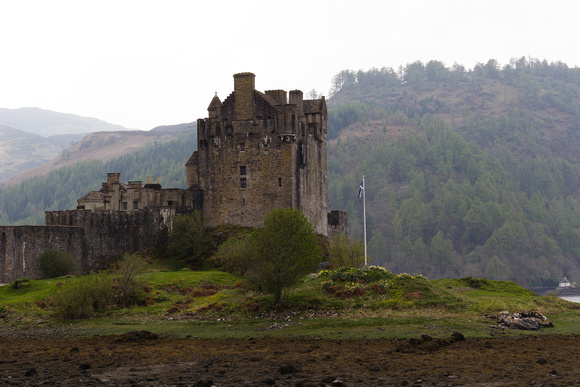
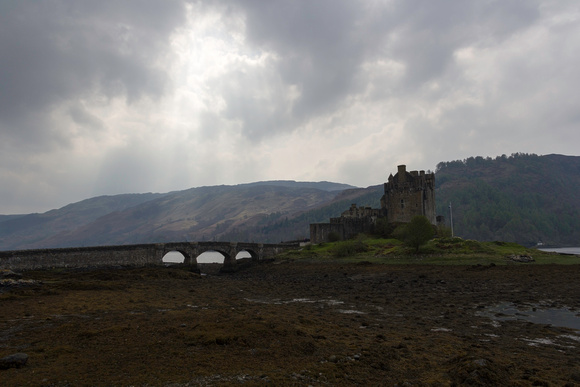
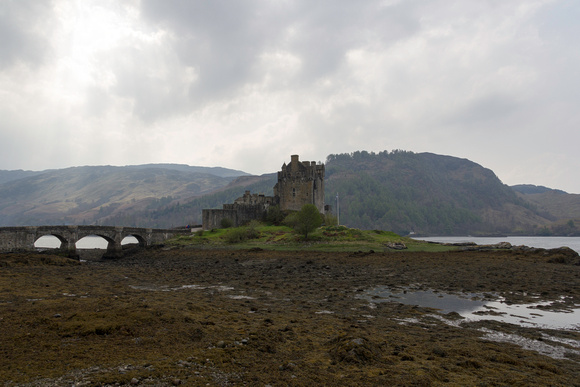
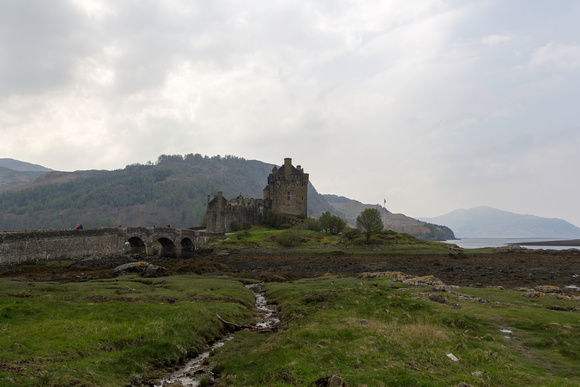
Eilean Donan Castle on the shore of Loch Duich in the Scottish Highlands

The Eilean Donan Castle is a very beautiful castle, located on the shore of Loch Duich. It is actually located on an island, named Eilean Donan, which is located very close to the shore. The castle was part of many protests and fighting over the years, and was finally destroyed many centuries back to prevents its use in rebellions. It was only in the first half of the 20th century that the castle was restored back to the condition in which it is seen today and a bridge was constructed to connect the island to the mainland, and over the years, the castle became a tourist highlight. Right now, the castle is one of the most photographed castles in Scotland and is also among the most visited.

Flag of Scotland in front of the Eilean Donan Castle in the Scottish Highlands
Flag of Scotland in front of the Eilean Donan Castle in the Scottish Highlands (More photos )
This photo shows the Saltire (the Scottish Flag) in front of the Eilean Donan Castle, in a small stretch of green right in front of the castle. The rest of the grounds seems a bit brownish, but this is because this entire stretch of brown is the land that gets covered by water when the water level is high. Right now the water level was so low that even the bridge was over dry land, with no water below it (and when you see photos of the castle, there are times when the water level was much higher). In the background are hills with trees and green cover on the hills.


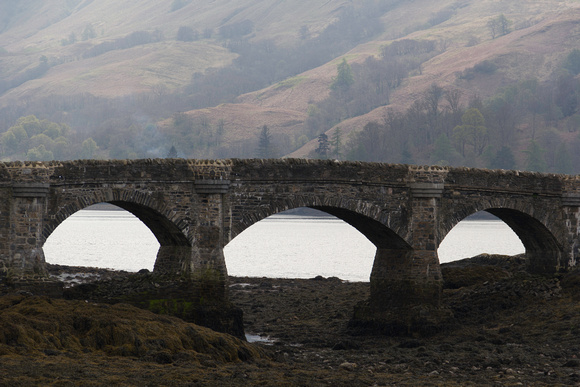
Bridge connecting the Eilean Donan Castle with the mainland
Bridge connecting the Eilean Donan Castle with the mainland (More photos)
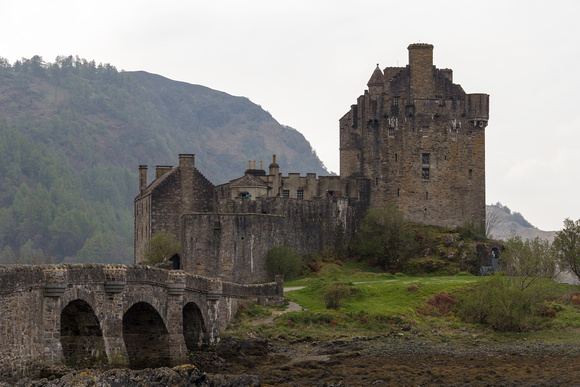
The stone bridge connecting the Eilean Donan Castle with the mainland (with the highway pretty close by). At this point of time, the water level was so low that the area under the bridge was totally dry, while at other points of time, the water level was much higher and there was some amount of depth of water under the bridge. The bridge looks real wonderful, looking like typical stone bridges from older times. 

Want to improve your photos? Buy Photoshop and see how your images come to life. Click to buy.

Want to get tips for improving your photography ? Get Photo Tips from this blog.

Wednesday, September 17, 2014

Visitors at 2 different castles in Scotland

The castles in Scotland have a great infrastructure in terms of visitors entry, facilities for visitors, ticketed entry, and so on. There are provisions for food and drink, well maintained outdoors (even though the actual castle building may be in ruins). The overall effect can be very beautiful. Some of the most famous castles in Scotland are Edinburgh and Stirling Castle, but there are other castles that also attract a large number of visitors, also because of their setting. A couple of such castles are the Eilean Donan Castle and the Urquhart Castle, both on the shores of Lochs and with an overall beautiful setting.


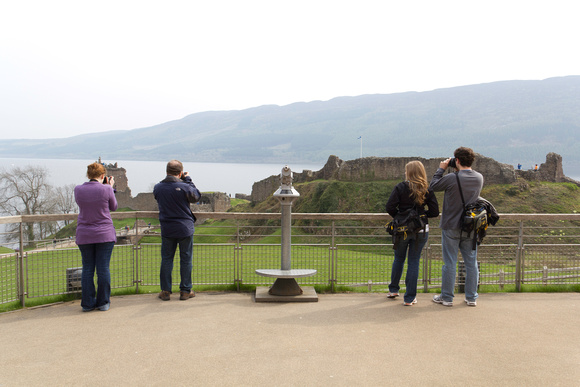
Tourists at Urquhart Castle in Scotland
Tourists at Urquhart Castle in Scotland (More Photos / Prints)
Visitors at the view point near Urquhart Castle. The castle is located on the shore of Loch Ness, and it is a big complex. There is a visitor entry right at the highway, and once you have crossed the visitor's entry, there is this viewing platform (where there is also a telescope that be used for getting a closer look at the ruins of the castle) from where you can get a great view of the castle, the lake, and the mountains at the other end of the Loch. In the photo, one can see many tourists using the same location to get a great view of the entire castle and the background.


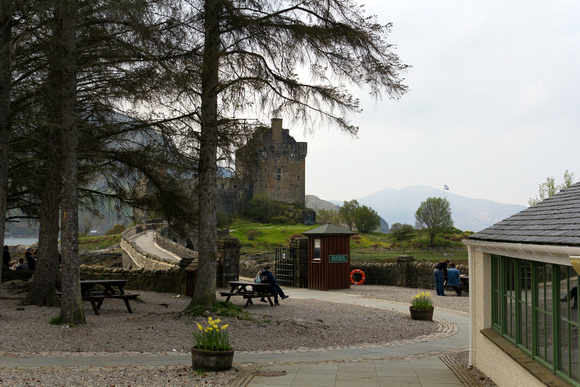
Eilean Donan Castle and visitor entry outside the castle
Eilean Donan Castle and visitor entry outside the castle (View more photos)
The beautiful entrance to the Eilean Donan Castle on the shore of Loch Duich in the Scottish Highlands. The Eilean Donan Castle is connected to the mainland by a small bridge, a small portion of which can be seen in the photo. Right before the gates of the castle (and before the bridge) is the visitor entry gate, where tickets are checked. Right outside the gates are some benches and a sitting area, and one can see some visitors sitting on these benches - these are some beautiful locations to relax and enjoy.

Want to improve your photos? Buy Photoshop and see how your images come to life. Click to buy.

Want to get tips for improving your photography ? Get Photo Tips from this blog.

Sunday, September 14, 2014

Urquhart Castle - A beautiful castle on the shore of Loch Ness in Scotland

Scotland is famous for many castles, spread all over. There were a number of clans spread over the region, and there were a number of battles in the medieval ages for supremacy and power. One of the major castles (besides the major ones such as Stirling Castle and Edinburgh Castle) was Urquhart Castle, located on the shore of Loch Ness. The castle is now in ruins, but the spread is still very beautiful, with the castle and the backdrop of Loch Ness, mountains in the distance and incredible greenery near the castle. The castle is located right next to the highway, making for easy access; and with a proper visitor center, it is a delight to go to.

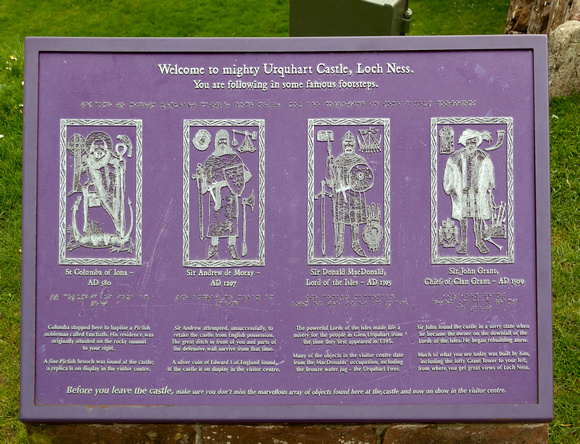
The plaque highlighting some influential people at Urquhart Castle in Scotland
The plaque highlighting some influential people at Urquhart Castle in Scotland (More photos / Prints)
This is a plaque at the visitor center at Urquhart Castle. The plaque highlights some of the critical people who are important and influential and who have been here - namely, St Columba of Iona, Sir Andrew De Moray, Sir Donald MacDonald, and Sir John Grant (chief of Clan Grant).


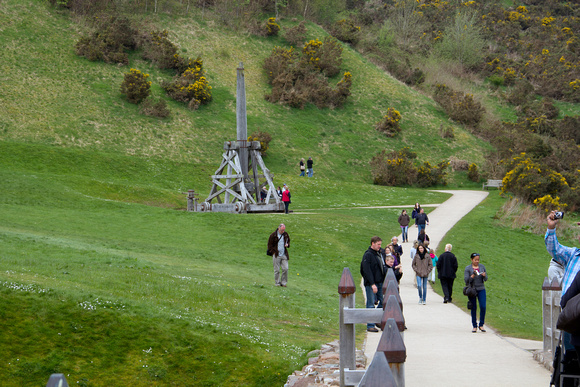
Replica of wooden trebuchet at Urquhart Castle, on the path
Replica of wooden trebuchet at Urquhart Castle, on the path (More photos / Prints)
A trebuchet was one of the most powerful siege weapons, used by attacking armies against castles. The trebuchet could throw all kinds of projectiles over castle walls as well as attack castle walls (along with the catapult); one of the more horrific uses was in terms of throwing diseased bodies over the walls with the intention of causing disease among the defenders.

Want to improve your photos? Buy Photoshop and see how your images come to life. Click to buy.

Want to get tips for improving your photography ? Get Photo Tips from this blog.

Monday, September 01, 2014

Photos from Urquhart Castle (along Loch Ness)

Urquhart Castle is a fabulously beautiful castle located on the shore of the Loch Ness, close to Inverness in Scotland. The castle is essentially ruins now, but its location, and the incredible greenery all around the castle is superb. It is located on the A82 and is very accessible. Right next to the castle, one can get boat rides of Loch Ness, and the whole experience is superb. The castle was in prominence from the 13th to the 16th centuries, and was destroyed in 1692 to prevent its use during rebellions.


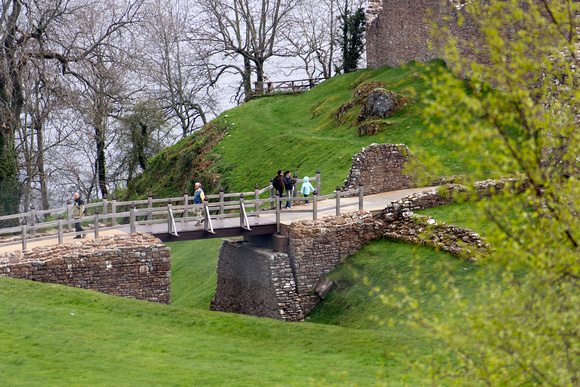
View of Urquhart Castle and the path leading to it
View of Urquhart Castle and the path leading to it (More photos at this link)
This is the approach to the ruins of the castle from the road and the visitor center. The place is incredibly beautiful and with the great Loch Ness right next to it, it can look pretty romantic.


Tourists on a stone bridge crossing the moat at Urquhart Castle
Tourists on a stone bridge crossing the moat at Urquhart Castle  (See more photos at this link)
This is a small bridge. It is over a moat that no longer exists of course, and it is speculated that the moat was built in the middle ages, but there is really no correct dating of when the moat was made. This bridge has to be crossed by every visitor who comes to see the castle.

Want to improve your photos? Buy Photoshop and see how your images come to life. Click to buy.

Want to get tips for improving your photography ? Get Photo Tips from this blog.

Saturday, August 16, 2014

Photos from inside Edinburgh Castle

Edinburgh Castle is one of the most famous tourist attractions in the city of Edinburgh, in fact, in the whole of Scotland. It has been there for many centuries, starting from early fortifications with succeeding kings either building on top or replacing the existing structures. The castle sits on a natural defensive fortification, a volcanic plug that rises above the surrounding area and hence provides a natural line of defense (although it does make getting supplies inside in the case of a siege more difficult).
Edinburgh Castle is also famous for another more sinister reason, it is supposed to be haunted (although since most people visit it in the daytime, you won't see people running out of the place scared). These haunted sections are typically supposed to be in the underground dungeons and tunnels connecting to the Royal Mile (there has been no proof though, so consider this with a pinch of salt).

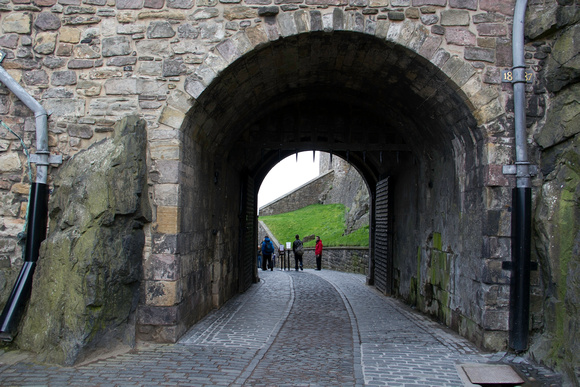
The Portcullis set inside a gateway of Edinburgh Castle
The Portcullis set inside a gateway of Edinburgh Castle (More photos at this link)
The metal Portcullis set as part of the stone doorway near the entrance of Edinburgh Castle. The purpose of this metal device was simple. At the sign of any danger or as part of normal security procedures, the metal structure with thick bars would be lowered to ground level, setting another barrier against enemies who had managed to penetrate inside the Castle to this point. Now of course, it is permanently raised, just being there so that visitors can also note the presence of one of the security structures located inside the castle.


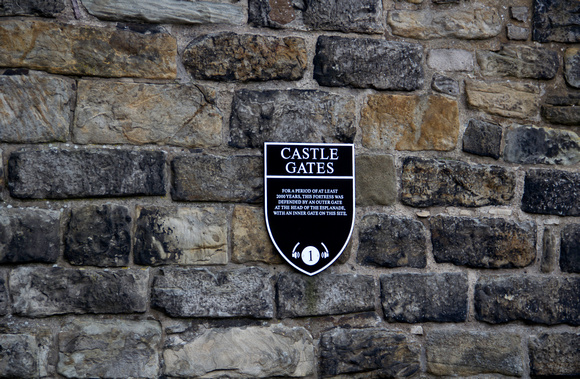
The sign for the Castle Gates inside the Edinburgh Castle
The sign for the Castle Gates inside the Edinburgh Castle (more photos here)
The audio clue (also meant for those who have rented headphones for an audio guide to the castle) telling visitors that these stone walls have been guarding the inside of the castle for over 2000 years, maybe in different versions. But these high and thick walls have been protecting the castle for millenia now, ever since fortifications were setup on this site (located at a much higher level than the surroundings).


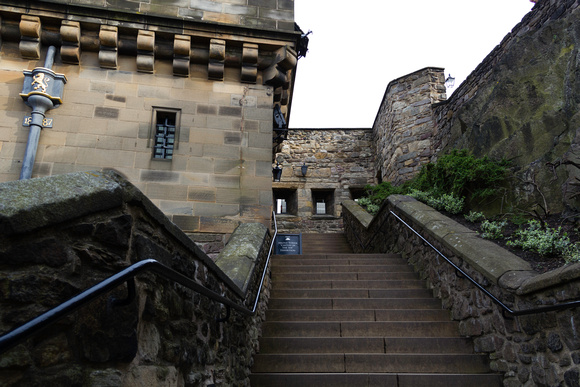
Grand staircase inside the Edinburgh Castle
Grand staircase inside the Edinburgh Castle (view more photos at this link)
A grand and sweeping outdoor staircase inside the Edinburgh Castle. The blue sign that you see announces an exhibition inside the Argyle tower, a tower that got its name from politics and death (it was the tower that was apparently housing the 9th Earl of Argyle before he was finally executed in 1685). The castle seems very well maintained, and it is pretty safe to walk all around the castle without worrying that any of these structures (or part of them) will come down.


Tourists emerging from a lower level in the Edinburgh Castle
Tourists emerging from a lower level in the Edinburgh Castle (View more photos here)
The Edinburgh Castle has a number of different buildings inside it, as you would expect, given that the castle had a large number of people living inside it, and was expected to hold out for long periods of time during a siege by enemy forces. In addition to the royal family, there would be the garrison (royal guards and others), and the staff catering to the royal family. Some of them are at different levels, some of them have lower levels (or basements), walking through the entire Castle can be tiring for those not used to walking so long.

Want to improve your photos? Buy Photoshop and see how your images come to life. Click to buy.

Want to get tips for improving your photography ? Get Photo Tips from this blog.

Sunday, November 10, 2013

Scenery of the Lochs in the Scottish Highlands - very beautiful

A lake in Scotland along with the greenery and hills on the shore
A lake in Scotland along with the greenery and hills on the shore (More photos at this link)
Scotland is famous the world over for its beauty, and attracts a huge number of visitors every year who come here to admire the place and travel. Particularly, they come to see the Scottish Highlands, and while places like Edinburgh are beautiful, it is the Scottish Highlands that attract those visitors who come here to see the beauty of the place; they come to see the lochs (the Scottish and Irish word for lakes), they come to see the hills and mountains, the rugged outdoors and the fabulous view of nature everywhere. If you can make it, you should come here to see this place.

If you want a print of this image, here is a Digital Oil Painting on Fine Art America.


Loch Duich and the surroundings in the Scottish Highlands
Loch Duich and the surroundings in the Scottish Highlands (View more photos here)
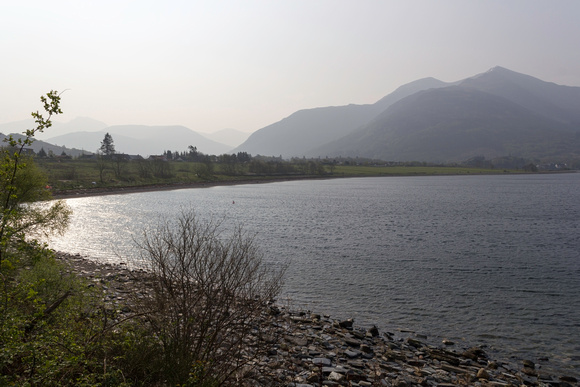
The Lochs in the Scottish Highlands tend to be narrow but long. So when you are next to a lake, you can see that the loch extends far beyond the horizon to the left and right, but you can easily see the opposite end of the Loch (different from the traditional round nature of a lake). However, this is a photo of the shore of the Loch right next to the beautiful Eilean Donan Castle. This is a typical view of a Loch, with the water and with green covered mountains right next to it.

A print of this image, in the form of a Digital Cartoon is available at Fine Art America.


A small island in the water of a lake in the Scottish Highlands
A small island in the water of a lake in the Scottish Highlands (Get more such photos here)
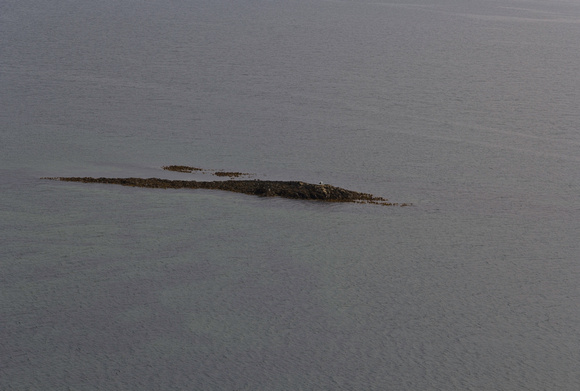
Scotland is teeming with Lochs, big and small. Some of them are huge, with the most famous one, Loch Ness being as much as 230 meter deep. Others are smaller, and some of them are fresh water Lochs while are sea water Lochs. The interesting point about these Lochs is that they are narrow (even Loch Ness, which is 36 km long, is only 2.3 km wide at its widest point). In this case, this is a very small strip of rock emerging from the surface of this Loch, located very close to the Skye Bridge. The only use for this small strip of land seems to to allow birds to land, although a small swell would be enough to cover this patch of land.

If you want a print of this photo, you can get it at this link.

Want to improve your photos? Buy Photoshop and see how your images come to life. Click to buy.

Want to get tips for improving your photography ? Get Photo Tips from this blog.

Wednesday, October 30, 2013

The structure of the Stirling Castle, seen from a lower level

View of the structure of Stirling Castle as seen from a lower level of the castle
View of the structure of Stirling Castle as seen from a lower level of the castle (More photos at this link)
The structure of Stirling Castle, as seen from a lower level (near the entrance, near the car parking). The Stirling Castle played a very significant role during the medieval centuries, when there was a fight ongoing for the Scots to retain their independence from the English, and there was also fighting going on between the different Scots for power. The Castle is surrounded by a high wall, and is itself located on a volcanic spur, much higher than the neighboring region, making it more

Get a Black and White print of this photo at Fine Art America. Get color print.


Staff with ladders for maintenance of the wall and creepers at Stirling Castle
Staff with ladders for maintenance of the wall and creepers at Stirling Castle (View more photos at this link)
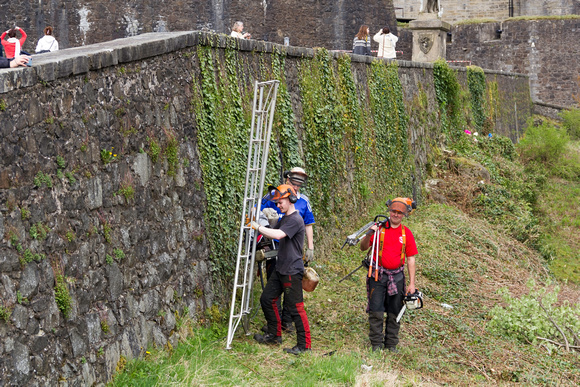
Historical monuments (especially those that are several centuries old) require a lot of maintenance. Just the sheer size of these monuments, and being exposed to different weather conditions, can cause a lot of damage and wear and tear. And with their heritage value, as well as having a large number of tourists visiting them on a regular basis, the need for maintenance is on a regular basis. In the photo, one can see maintenance workers on the wall of the Stirling Castle.

Get prints of this photo at Fine Art America (Color, B&W)


Parking area and ticketing counter at the Stirling Castle in Scotland
Parking area and ticketing counter at the Stirling Castle in Scotland (More photos at this link)
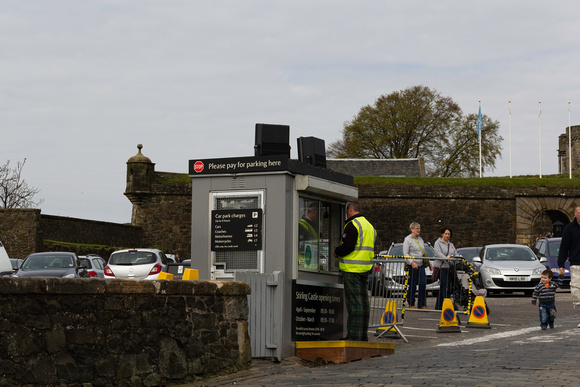
The parking lot near the entrance to the Stirling Castle. Even though the parking lot is as close to the entrance as possible, given the size of the structure, there will be some walking required, and any visitor will need to be aware of that. Having such a parking lot is extremely important because of the number of visitors to the Castle on a regular basis.

Get prints of the image at Fine Art America.

Want to improve your photos? Buy Photoshop and see how your images come to life. Click to buy.

Want to get tips for improving your photography ? Get Photo Tips from this blog.

Saturday, October 26, 2013

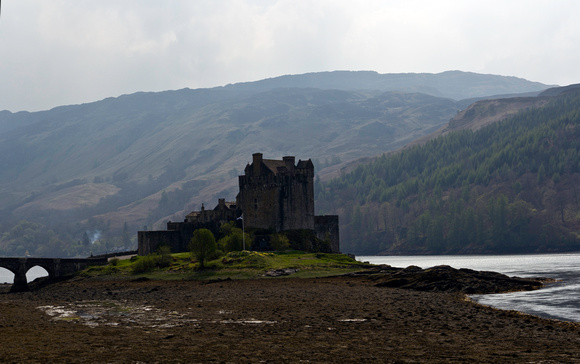
The imposing structure of the Eilean Donan Castle in the Scottish Highlands

Structure of the Eilean Donan Castle in front with a dry part of the lake
Structure of the Eilean Donan Castle in front with a dry part of the lake (More photos at this link)
A view of the historic Eilean Donan Castle, located on a small island (which has the same name), located in Loch Duich in the Scottish Highlands. The castle was in the thick of many uprisings and other battles till it was finally overrun and destroyed in 1719. The current structure and the bridge were reconstructed in the early part of the 20th century with the same feel as the older building, and now is one of the most famous castles in Scotland (having appeared in many movies as well) and has been photographed a huge number of times. Right in front of the castle is a Scottish Flag, called the Saltire.

Get a print of this photo in the form of a Digital Oil Painting from Fine Art America.


The Eilean Donan Castle along with the stone bridge in front with a dry part of the lake
The Eilean Donan Castle along with the stone bridge in front with a dry part of the lake (More photos here)
A view of the entire Eilean Donan Castle (located on its own island) along with the bridge connecting the castle to the mainland. The part of the lake surrounding the island is dry, and one can see the dry portion of the lake with no growth on the lake bed (for land under the lake, if it is only dry for some time, then there can be very little growth on such land). There was light coming from the clouds, with the light seemingly projecting onto the entire setting).

Get a print of this photo in the form of a Digital Oil Painting on Fine Art America.


Tourists trying to get a vantage view of the Eilean Doonan Castle in Scotland
Tourists trying to get a vantage view of the Eilean Doonan Castle in Scotland (More photos at this link)
Tourists on a vantage point near the Eilean Donan Castle. The Castle is located close to the Isle of Skye, and is an exceedingly beautiful castle. These rocks provide a great side view of the castle, and these visitors were having a great vantage view.

Get a print of this photo in the form of a Digital Oil Painting on Fine Art America (link)

Want to improve your photos? Buy Photoshop and see how your images come to life. Click to buy.

Want to get tips for improving your photography ? Get Photo Tips from this blog.

Thursday, October 24, 2013

Eilean Donan Castle in the Scottish Highlands - very beautiful castle

Structure of the Eilean Donan Castle with a stone bridge connecting the castle and water nearby
Structure of the Eilean Donan Castle with a stone bridge connecting the castle and water nearby (More photos here)
The Eilean Donan Castle is one of the most beautiful castles in Scotland, located on the shore of Loch Duich in the Scottish Highlands. The castle was part of the history of infighting during the medieval ages, but was then blown up in 1719 to prevent any further fighting using the castle as a base. The current structure of the castle was rebuilt between 1919 and 1932, along with the bridge (seen in the current photo) that connected the islands to the mainland, and now allows a large number of tourists to pay the entry charge and make their way inside the castle. The island is a pretty small castle, and at points, the water level recedes enough that anybody can directly walk to the island.

Get a print of this photo in the form of a Digital Oil Painting at Fine Art America.


Structure of the Eilean Donan Castle with a stone bridge connecting the castle with a thin stream of water
Structure of the Eilean Donan Castle with a stone bridge connecting the castle (more photos here)
Another view of the beautiful Eilean Donan Castle located on the shore of Loch Duich. There is a small bridge that connects the island to the mainland, and is also the way that tourists can come to visit the island. At this point of time, the water levels are low, and a lot of the surrounding of the castle are uncovered, and the lake bed at this point of time shows that it was under water (visible as the brown surface of the land without any green cover). This very thin channel of water that was visible in this photo, flowing through the greenery was very interesting, since it was just a trickle.

Get a print of this beautiful photo in the form of a Digital Oil Painting on Fine Art America.


Structure of the Eilean Donan Castle with a stone bridge connecting the castle
Structure of the Eilean Donan Castle with a stone bridge connecting the castle (More photos of castle here)
Another close up view of the Eilean Donan Castle in this photo, showing the stone structure of the castle as well as the bridge connecting the castle (and the island on which the castle is located) to the mainland. Way back in 1719, the castle was destroyed to prevent it being the base of any further uprising, and it was only in the early 20th century that the castle was reconstructed along with the bridge in front. Now, this is one of the most famous castles in Scotland and particularly one of the most photographed structures in Scotland.

Get a print of this beautiful structure in the form of a Digital Oil Painting on Fine Art America.

Want to improve your photos? Buy Photoshop and see how your images come to life. Click to buy.

Want to get tips for improving your photography ? Get Photo Tips from this blog.

Stirling Castle located at a height - very significant in medieval times

The welcome plaque for the Stirling Castle at the entrance of the Castle
The welcome plaque for the Stirling Castle at the entrance of the Castle (More photos here)
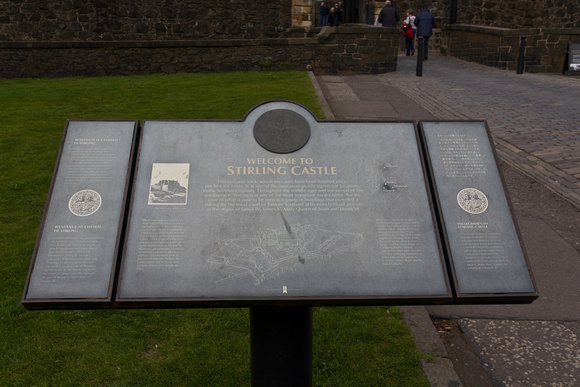
The plaque near the entrance of the Stirling Castle. Stirling Castle is one of the most famous castles in Scotland, and along with the Edinburgh Castle, played a very strategic role in the medieval ages when there were constant skirmishes between the English and Scotsmen over their independence. In fact, one of the most famous battles during this fight happened nearby, where a contingent of Scots being led by 'Braveheart' William Wallace defeated an English army in the nearby battle of Stirling Bridge. The Castle is located on a height, a natural volcanic height, and has a commanding position over the entire surroundings.


Houses and meadows as seen from the height of the Stirling Castle
Houses and meadows as seen from the height of the Stirling Castle (More photos at this link)
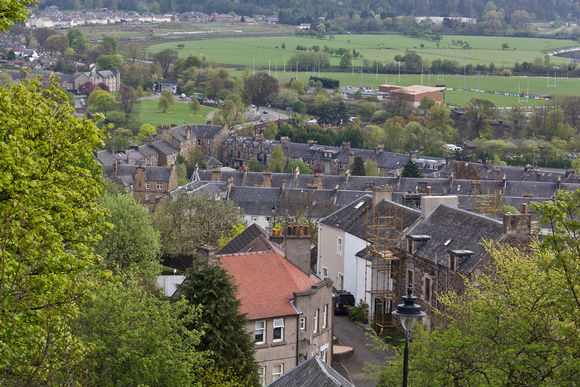
A view of the surrounding scenery and houses, showing the height at which the Castle is located. Of course, given that it is an important tourist attraction for anybody who comes to Stirling or even to Scotland, there is a very good road connectivity to the Castle. In the distance is rolling countryside, with farms and trees. It looks tremendously beautiful, especially on days when there is very clear visibility for long distances all around.

Print available for this image, in the form a Digital Oil Painting at Fine Art America.


Statue of Robert Bruce and the structure of Stirling Castle on the hill
Statue of Robert Bruce and the structure of Stirling Castle on the hill (More photos at this link)
Robert Bruce was one of the leaders who was involved in the constant battle against the English rulers who were attempting to control Scotland. He was from one of the high families in Scotland, and had collaborated with the English at one point of time and fought with them at another point of time. Eventually, when the English were routed from there, he took over as the ruler of Scotland, and his statue is located near the entrance of Stirling Castle. The photo shows the high walls of the castle, and the yellow building in the rear is the refurbished and restored Great Hall inside the castle.

Want to improve your photos? Buy Photoshop and see how your images come to life. Click to buy.

Want to get tips for improving your photography ? Get Photo Tips from this blog.

Sunday, October 20, 2013

The rugged beauty of the Scottish Highlands - rough scenery

Rugged part of the Scottish Highlands with a water body and small hills
Rugged part of the Scottish Highlands with a water body and small hills (More photos here)
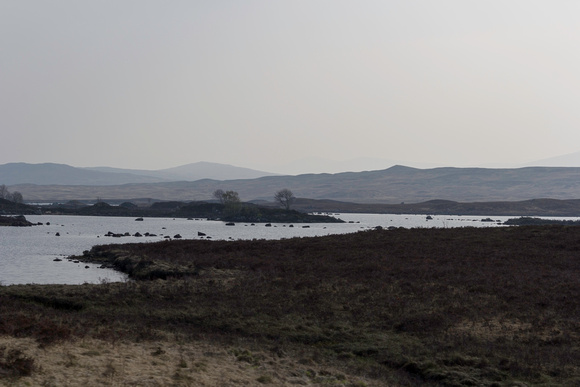
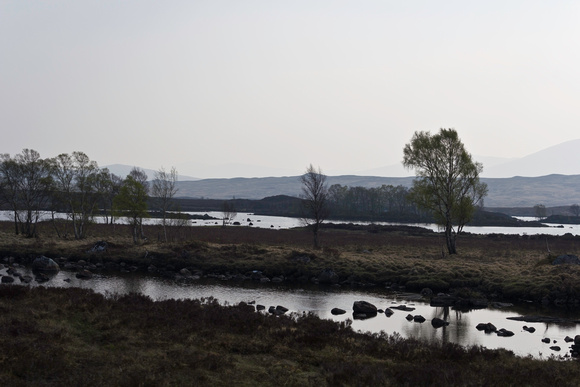
This is a stretch of the rugged section of the Scottish Highlands. We were staying near Loch Ness and were moving towards the northern parts of the Highlands, and the highway took us through sections of countryside that were rugged and rough. There was no human habitation for long distances, just this stretch of water bodies moving lazily through this countryside which had stretches of scrubland, with some trees in between. Even the water bodies seemed to move where they wanted rather than through straight channels. And in the distance were these mountains, not very high, but still looking beautiful.

Get a print of the photo in the form of Digital Oil Painting at FAA.


Water bodies and greenery in the rugged part of the Scottish Highlands
Water bodies and greenery in the rugged part of the Scottish Highlands (View more photos here)
A view of some of the more rugged parts of the Scottish Highlands, well actually, the rugged parts that have a highway passing through them :-). We were on the highway, having proceeded from next to Loch Ness, to the northern part of the Highlands, and came across this region of more wilderness, with water bodies in the region, rough land covered by scrubs and a few trees. The water bodies could be anywhere, with the springs from the mountains contributing to the water. The presence of these rocks and boulders suggested that in times of strong rain, the water moved much more ferociously.


Cars on a road in the rugged wilderness of the Scottish Highlands
Cars on a road in the rugged wilderness of the Scottish Highlands (More photos here)
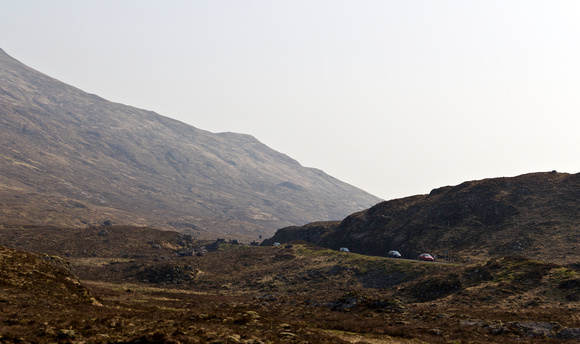
I like this photo, since it shows the rugged nature of the Scottish Highlands, even though the presence of a highway through the place destroys the nature of wilderness to some degree, This was the highway through which we had just passed, moving through small and higher mountains, and with no great greenery anywhere. The entire area is a hard place, with some greenery, but more of scrub type vegetation everywhere. In this photo, the highway is along the slope of a short hill and with a number of cars on the highway.

Get a print of the photo in a Digital Oil Painting on the site, Fine Art America.

Want to improve your photos? Buy Photoshop and see how your images come to life. Click to buy.

Want to get tips for improving your photography ? Get Photo Tips from this blog.

Monday, October 14, 2013

Tourists at the Stirling Castle in Scotland

Tourists inside the Stirling Castle in Scotland near the entrance gate
Tourists inside the Stirling Castle in Scotland near the entrance gate (photo sizes and more photos)
The Stirling Castle in Scotland, located near the town of Stirling, is one of the most important marks of the Scottish medieval ages history, the time when there were constant skirmishes between the Scots and the English (which ended when they got a common king in 1603, and then they were merged around a hundred years later). Close by, one a bridge over the Stirling river, one of the important battles of this fight for retaining their independence was fought, celebrated in the movie "Braveheart".
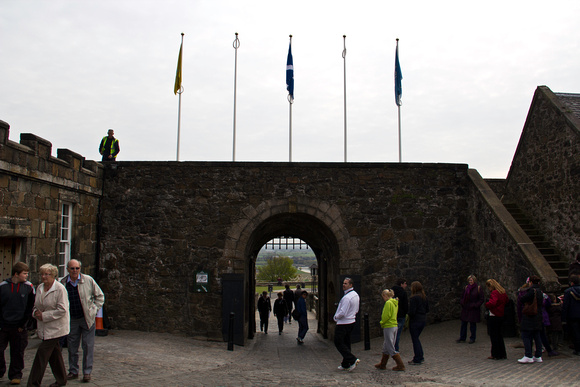
This is a photo near the entrance to the castle, and if you look through the entrance, you can see the gardens and even a hint of the river at lower levels (like most castles), the Stirling Castle is located at a higher level as a part of good defensive strategy. Over the entrance, you can see some flags, with the central flag being the Saltire, the Scottish Flag (as distinct from the Union Jack (the British Flag)). There are ongoing efforts to gain independence for Scotland, and the Saltire plays a key role in that.

If you want a print of this photo, available at FAA.


Van approaching the entrance of the Stirling Castle
Van approaching the entrance of the Stirling Castle (more photos and sizes here)

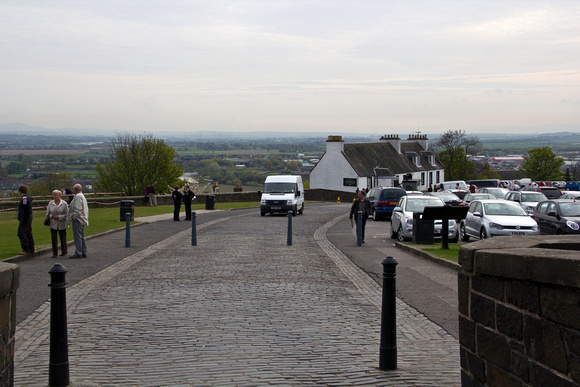
The Stirling Castle is located at a height over the surrounding, at a natural volcanic height called Castle Hill (the name sounds so appropriate, right?). The height and the natural beauty and greenery of the surroundings gives a beautiful look to the location, with houses and rolling meadows seen below. Vehicles are allowed upto the car parking which is located close to the entrance, but there will be some walking involved to the entrance, and of course, inside the castle, there will be more walking involved. The spot from where this photo was taken only allows vehicles belonging to the castle to go through, everybody else needs to park their vehicles in the car parking. From this location, there are also some view finders that allow you to see the landscape.

Prints of a version of this photo that has been converted into an Oil Painting available at FAA.


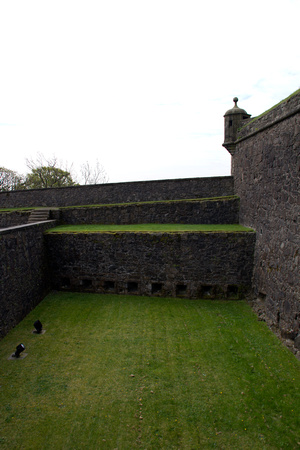
The depth of the moat, now covered with grass at Stirling Castle
The depth of the moat, now covered with grass at Stirling Castle (more photos and size here)
In addition to the huge advantage of being at a height from where you can see approaching enemies and try to pick them out as they climb up to reach the castle, there was the always the moat to deter attackers. This moat, now empty and looking beautifully green, would have been full of water and maybe some pollutants to deter people from trying to cross the moat other than through a narrow bridge (which could have been pulled up), all the while defenders from the top of the castle walls would have been attacking those who were attacking the castle. It looks so beautiful now, but is deep and would have been dangerous at those times.

Prints of a version of this photo that has been converted into an Oil Painting available at 500px.


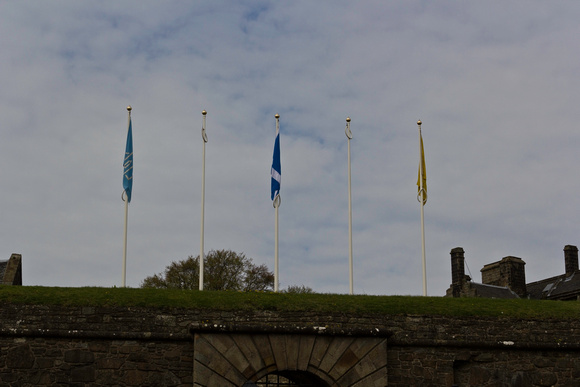
Furled Scottish Flag at the top of entrance gate of the Stirling Castle
Furled Scottish Flag at the top of entrance gate of the Stirling Castle (more photos available here)
In the first photo above, visitors could be seen near and at the entrance to the Stirling Castle. This is a photo of the flags and flagpoles above the entrance. It was always interesting for me to see whether it would be the Union Jack (the official flag of Great Britain) or the Saltire (the Scottish Flag) at the various castles and other historical landmarks. In this case (and even at the Eilean Donan Castle), I could see the Saltire while the Union Jack was in a prominent position at Edinburgh Castle. I was hoping to get a photo with the flag fluttering, but there was no wind and hence no flutter.
Want to improve your photos? Buy Photoshop and see how your images come to life. Click to buy.

Want to get tips for improving your photography ? Get Photo Tips from this blog.

Sunday, July 07, 2013

Doing snorkeling in the waters of the Ras Muhammed marine park in the Red Sea in Egypt

Close up view of the submerged head of a snorkeling tourist in the Ras Muhammed national park in Egypt

Close up view of the submerged head of a snorkeling tourist in the Ras Muhammed national park in Egypt

This is a close up photo taken while snorkeling in the Ras Muhammed national park, a protected location, near the tourist town of Sharm el Sheikh. Snorkeling is on the must do list of everybody, with snorkeling locations fairly close by. The photo was taken with a waterproof camera (here is such a camera - Olympus TG-320 Water Proof camera). Using a waterproof camera in such close quarters can make for a very interesting photo. I like the feel of this photo, but one needs to read that it was taken while snorkeling to actually understand what it actually is.


Snorkeling man propeling himself forward in the water of the Red Sea

Snorkeling man propelling himself forward in the water of the Red Sea

A man propelling himself to the front in the snorkeling zone of the Ras Muhammed marine park near Sharm el Sheikh in the Red Sea. There were many small sections of coral reef in the park, and they were fairly close by. So you see one coral reef, and then move to the next set of coral reefs through shallow water (well, about 10-15 feet in depth) by swimming from one location to another. In this case the person was not wearing a life jacket, and knew enough about swimming to easily move from one location to another. So there is a lot of movement of the feet, but not much of hands.


Snorkeling tourists in the Red Sea in the Ras Muhammed marine park in Egypt

Snorkeling tourists in the Red Sea in the Ras Muhammed marine park in Egypt

A set of people doing snorkeling in the water of the Red Sea near Sharm el Sheikh. During the day, just off the land and pretty close to the shore, there are a large number of people who come there for snorkeling (coming via ship or through the overland route from Sharm el Sheikh). At times, you can get a big group of people doing snorkeling among reefs that are not very distant from each other. So, in this photo, even while taking this photo, there were people all around me, just in front of me, even closer where you can see the splashing of water right in front.


Snorkeling tourists clutching a rubber tube in the Ras Muhammed marine park in the Red Sea

Snorkeling tourists clutching a rubber tube in the Ras Muhammed marine park in the Red Sea

A rubber tube can be real useful when you are in water that is deeper than you height, and in these snorkeling areas, the height was anywhere between 10 and 20 feet. So you had a rubber tube that was used by 3 to 4 tourists doing snorkeling. They would clutch onto a rubber tube, and be face down (even though they were already wearing life vests and hence may not really need a rubber tube) so that they could easily watch the coral reefs located below the surface of water and also see the colorful fish that were nearby.

Want to improve your photos? Buy Photoshop and see how your images come to life. Click to buy.

Want to get tips for improving your photography ? Get Photo Tips from this blog.

Sunday, June 16, 2013

Tourists wearing snorkeling equipment around coral reefs in the Red Sea in Egypt

Clutching to rubber tubes while snorkeling in the Red Sea near Sharm el Sheikh

Clutching to rubber tubes while snorkeling in the Red Sea near Sharm el Sheikh

Tourists in the water of the Red Sea in the Ras Muhammed protected marine park, near the Egyptian town of Sharm el Sheikh. They are here for the snorkeling, with a number of coral reefs nearby (if you look closely, you can see a coral reef just next to these tourists, something that looks shining under the water). Most of this set of tourists are not wearing life vests, and if they do not know swimming, the rubber tube provides an excellent device to help them float. In the photo, you can see some of these tourists with their head under the water, trying to look at what was under the water surface while some of the others are either tired or taking a break and have their heads out of the water.


Man wearing the snorkeling equipment including the life vest, with the head out of the water

Man wearing the snorkeling equipment including the life vest, with the head out of the water

A man with his head out of the water. He is wearing the entire snorkeling equipment, with the goggles, air tubes, and the life vest (and that too, a bright colored life vest). This is winter, but the temperature of the water in the Red Sea near Sharm el Sheikh is incredible, and the water was very comfortable. This photo is almost like a poster for doing snorkeling, and was taken in the Ras Muhammad national park in the Sinai peninsula, of a tourist who had come here from Sharm el Sheikh to do snorkeling in the coral reefs in the region.


View of the backside of 2 people swimming face down in the Ras Muhammad national park in Egypt

View of the backside of 2 people swimming face down in the Ras Muhammad national park in Egypt

2 people swimming in the Ras Muhammad protected national park near the town of Sharm el Sheikh in Egypt, near the southern tip of the Sinai peninsula. This is the typical pose of people doing snorkeling, with their eyes covered by a goggle and an air tube projecting up in the air. Both of them are wearing life vests and one of them is also wearing flippers, which can make swimming easier, but which need to be handled properly (however, flippers can hurt very badly if you accidentally tread on somebody's foot with them).


Tourists gathered around a rubber tube in the Ras Muhammad national park in Egypt in the Red Sea

Tourists gathered around a rubber tube in the Ras Muhammad national park in Egypt in the Red Sea

A number of tourists gathered around a rubber tube in the water. This is in the Red Sea, in the Ras Muhammad protected marine park near the town of Sharm el Sheikh. A large number of tourists come to the marine park, for doing snorkeling near the coral reefs. Some of the coral reefs here are small in section, which means that one can easily cover some of these reefs in a few minutes, but with the number of colorful fish around these reefs, one can just be there and watch these fish.

Want to improve your photos? Buy Photoshop and see how your images come to life. Click to buy.

Want to get tips for improving your photography ? Get Photo Tips from this blog.

Saturday, June 15, 2013

People near Sharm el Sheikh in Egypt, in the coral reefs of the Ras Muhammed marine park

Tourists in different physical modes while doing snorkeling in the Ras Muahmmed marine park in Egypt

Tourists in different physical modes while doing snorkeling in the Ras Muahmmed marine park in Egypt

Tourists floating, getting ready to float and standing, all in the Ras Muhammed marine park near Sharm el Sheikh in the Red Sea in Egypt. They are all very close to a coral reef, since if you look behind these people, you see a shine in the water, which is that of a coral reef very close to the water surface. All 3 of them (2 ladies and 1 man) are wearing the essential snorkeling equipment (goggles and air tube) while the man is not wearing a life vest and the other 2 are (although in the case of one of them, the life vest has climbed up on the shoulders and does not appear to have been properly fastened).


Man wearing snorkeling equipment emerging from the water and can see the feet of another person wearing a flipper

Man wearing snorkeling equipment emerging from the water and can see the feet of another person wearing a flipper

A man emerging from the water, wearing the goggles and air tube which form the essential part of snorkeling equipment, in the Ras Muhammed protected marine park, near the tourist town of Sharm el Sheikh in the Red Sea. There are a number of coral reefs in the region, and hence there are a number of people who come here to do snorkeling. In this photo, the leg of another person doing snorkeling can also be seen, along with the flipper that they are wearing. The flippers make you more graceful in the water, but can be a pain outside the water, and can hurt badly if you hit somebody with this flipper.


Can see just the back of multiple people wearing snokeling equipment and looking into the water

Can see just the back of multiple people wearing snokeling equipment and looking into the water

A large number of people wearing the goggles and air tubes that are a part of snorkeling equipment and currently doing snorkeling in the Ras Muhammed marine park (a protected marine park where no commercial activities are allowed except for tourism). This is a typical posture of people doing snorkeling, where nothing can be seen of the people except for their backs and hair, and the air tubes rising into the air.

Want to improve your photos? Buy Photoshop and see how your images come to life. Click to buy.

Want to get tips for improving your photography ? Get Photo Tips from this blog.

Friday, June 14, 2013

Snorkeling in the Ras Muhmmed marine park near Sharm el Sheikh in Egypt

Snorkeling tourists grouped around a rubber tube near Sharm el Sheikh in Egypt

Snorkeling tourists grouped around a rubber tube near Sharm el Sheikh in Egypt

Snorkeling in the waters of the Red Sea in the Ras Muhammed protected marine park near Sharm el Sheikh is very popular. The marine park, located at a distance of between 12-15 km from Sharm el Sheikh is a protected place, with no commercial activity allowed in that area. There are a number of coral reefs located in the marine park, and they attract tourists who come here to snorkel. In this photo, you can see many such tourists clutching onto a rubber tube for support (in fact, two rubber tubes). Some of the tourists are looking into the water, while others are standing upright. In the background, one can see a shine under the water level, which is a coral reef.


Man wearing snorkeling equipment heading towards a rubber tube in the Ras Muhammed park

Man wearing snorkeling equipment heading towards a rubber tube in the Ras Muhammed park

A man wearing the goggles and air tube which is part of the snorkeling equipment. However, he is not wearing a life vest that many others who do snorkeling end up wearing. There is a rubber tube right in front of him, and this rubber tube acts as an excellent flotation device. The man seems to be heading towards the floating tube, and although this photo shows only one person, the other photos shows a number of tourists all around. If it was only one person, it might end up seeming a bit lonely. The water here is deeper than the height of the person, and hence for those who do not know swimming, the use of either a life vest or such a rubber tube can become essential.


2 people seemingly collaborating while doing snorkeling in the Red Sea

2 people seemingly collaborating while doing snorkeling in the Red Sea

Overall 3 people in the photo, all of them snorkeling in the protected marine park of Ras Muhammed near the Egyptian tourist town of Sharm el Sheikh, all near the Sinai Peninsula. It is always interesting to see people doing snorkeling, since if you have not done it or have not seen it being done, it can look very strange. In this photo, there are 3 people, all with their heads under water and wearing life vests and having air tubes coming out of the water. Snorkeling is only meant to be a water surface sport, since the air needs to be taken from just above the water surface, and hence the look. In addition, in the photo, there seems to be 2 people collaborating on the process of snorkeling, looking at the same thing. From this photo, it is not apparent the level of coral on the surface, although in most of these cases, the coral can be very close to the water surface.


Just heads visible above water while doing snorkeling in the Ras Muhammed marine park in the Red Sea

Just heads visible above water while doing snorkeling in the Ras Muhammed marine park in the Red Sea

Another view of heads of people doing snorkeling in the Red Sea, near Sharm el Sheikh, in the Ras Muhammed marine park in Egypt. The typical pose of people doing snorkeling is that of their hair being visible, since they are face down in the water, wearing protective goggles, and with an air tube protruding from the top so that they can get air from above the water surface. It is a very pleasant feeling, relaxing in the water, wearing a life vest and watching the colorful coral reef and the colorful fish that live there. Of course, it will not be pleasant if sharks arrive there, but it very rarely happens, although sharks did attack swimmers in Sharm el Sheikh a couple of years back.

Want to improve your photos? Buy Photoshop and see how your images come to life. Click to buy.

Want to get tips for improving your photography ? Get Photo Tips from this blog.

Subscribe to my feed

FeedRSS