Showing posts with label Reflection. Show all posts

Monday, May 26, 2025

Nature's Dark Jewels: Glistening Berries and a Guide to the Wild


Nature's Dark Jewels: Glistening Berries and a Guide to the Wild

Nature's Dark Jewels: Glistening Berries and a Guide to the Wild

Imagine a quiet stroll through a sun-dappled woodland or a vibrant hedgerow. Your eyes catch a flash of deep, rich color – a cluster of tiny orbs, hanging like precious gems from delicate stems. The image before us captures just such a moment: a beautiful, natural chandelier of dark berries, each one a miniature sphere reflecting the ambient light. This is a sight that speaks of nature's bounty, of hidden sweetness, and sometimes, of ancient folklore. Let's delve into the beauty of this specific cluster, likely elderberries given their characteristic formation, and then explore the wider world of berries – those we cherish in our kitchens and those that beckon with caution in the wild.

A Glimpse of Gleaming Perfection: Describing the Image

The photograph draws us into an intimate close-up. The primary focus is a generous, umbrella-shaped cluster of small, round berries. They are a deep, inky purple-black, so dark they almost absorb the light, yet each individual berry boasts a subtle, glossy sheen. This is where the magic of "light reflecting off the individual berries" truly comes alive. You can see tiny pinpoint highlights on many of them, like miniature stars captured on their smooth surfaces. These reflections give the berries a three-dimensional quality, a plumpness that suggests they are ripe and full.

The berries are held aloft by a delicate network of stems. These stems, branching out like fine lacework, have a slightly reddish-brown or purplish tinge, contrasting beautifully with the dark fruit and the green foliage in the background. Some stems are bare, hinting that perhaps a few berries have already been plucked by birds or have fallen. The overall structure is a corymb – a flat-topped or convex flower cluster where the individual flower stalks grow upward from various points on the main stem to approximately the same level – a typical formation for elderberries.

The background is a soft, impressionistic blur of green leaves, creating a lovely bokeh effect that makes the berry cluster pop. Dappled light filters through this foliage, further enhancing the play of light and shadow on the berries themselves. There's a sense of depth, with some leaves closer and more defined, while others fade into a gentle green wash. The overall atmosphere is one of natural, untamed beauty, a quiet moment in the life cycle of a plant. The shallow depth of field keeps our attention firmly on the glistening fruit, making them the undeniable stars of the show.

Beyond the Berry: An Abstract Reflection on the Image

Looking at this image, one can't help but feel a connection to the simpler, more ancient rhythms of nature. These berries are more than just fruit; they are:

  • A Promise of Sustenance: For centuries, such berries have provided food for wildlife and, when correctly identified, for humans. They represent nature's inherent generosity.

  • A Mark of the Season: The sight of ripening berries often signals the transition from late summer to autumn, a time of harvest and preparation for the leaner months ahead.

  • Tiny Vessels of Life: Each berry contains seeds, the potential for new growth, continuing the cycle of life.

  • Inspiration for Folklore and Tradition: Elderberries, specifically, are steeped in folklore across many cultures, associated with protection, prosperity, and even fairy realms.

  • A Study in Contrast: The deep, almost black, of the berries against the vibrant green of the leaves, the delicate stems holding heavy fruit – it’s a visual play of strength and fragility, darkness and light.

  • A Moment of Stillness: The image captures a fleeting moment. Soon these berries will be eaten, will fall, or will be harvested. But for now, they hang in perfect, glistening stillness, inviting contemplation.

This photograph isn't just a picture of berries; it's an invitation to look closer, to appreciate the intricate beauty in common things, and to remember our connection to the natural world.


Berries We Know and Love: A Culinary Delight

While the berries in the image are likely wild elderberries (which need to be cooked before consumption), they remind us of the many delicious and nutritious berries that grace our tables. Here are a few popular types that travellers and food lovers might encounter:

  1. Strawberries: Perhaps the most iconic berry, bright red, heart-shaped, and bursting with sweet, slightly tart flavour. Perfect eaten fresh, in desserts, jams, or smoothies. They are a symbol of summer.

  2. Blueberries: Small, round, and ranging from deep blue to purple-black, blueberries are prized for their sweet taste and antioxidant properties. Excellent in muffins, pancakes, pies, or simply by the handful.

  3. Raspberries: These delicate berries are typically red, though black, purple, and golden varieties exist. They have a unique, slightly fuzzy texture and a sweet-tart flavour with floral notes. They are fragile and best eaten fresh or used in jams and desserts.

  4. Blackberries: Larger and often tarter than raspberries, blackberries are a deep, glossy black when ripe. They have a robust flavour that stands up well in pies, crumbles, jams, and wines.

  5. Cranberries: Known for their tart, almost bitter taste, cranberries are rarely eaten raw. They are famously used in sauces (especially for Thanksgiving), juices, and dried as "craisins." They grow in bogs.

  6. Gooseberries: These can range in colour from green to red to purple and in flavour from tart to sweet, depending on the variety and ripeness. Often used in pies, crumbles, jams, and fools.

  7. Currants (Red, Black, White): Small, tart berries growing in clusters. Blackcurrants have a strong, distinctive flavour popular in drinks (like Ribena) and jams. Red and white currants are tarter and often used in jellies or as a garnish.

These cultivated berries are generally safe and widely available in markets and on menus. The real adventure, and potential danger, comes when encountering berries in the wild.


The Allure and Danger of Wild Berries

For the adventurous traveller or nature enthusiast, spotting a cluster of wild berries can be incredibly tempting. They evoke images of foraging ancestors, of living off the land, and of discovering unique, natural flavours. Many wild berries are indeed edible, delicious, and nutritious – think wild blueberries, raspberries, blackberries, and yes, elderberries (when cooked).

However, the wild also harbors berries that are unpalatable, mildly toxic, or even deadly poisonous. There is no single, universal rule (like "all red berries are safe" or "birds eat it, so I can too") to distinguish edible from poisonous berries. This is where knowledge, caution, and absolute certainty become paramount.


Identifying Edible Wild Berries: A Cautious Approach

Disclaimer: This information is for general guidance only and is NOT a definitive identification guide. Never consume a wild berry unless you are 100% certain of its identification by an expert or a reliable, local field guide. Misidentification can have severe or fatal consequences.

If you are interested in foraging, arm yourself with knowledge:

  1. Get a Good Local Field Guide: Purchase a high-quality, illustrated field guide specific to the region you are in. These guides will detail local edible and poisonous plants.

  2. Learn Basic Botany: Understand terms like leaf shape (simple, compound), leaf arrangement (alternate, opposite, whorled), flower structure, and fruit type.

  3. Focus on "Aggregate Berries": Berries like raspberries and blackberries are technically "aggregate fruits" – a cluster of tiny individual drupelets. These are generally safe, but always confirm the specific plant.

  4. "True Blue" is Often a Good Sign (But Not Always): Many edible berries are blue or black (e.g., blueberries, huckleberries, elderberries, bilberries). However, some poisonous berries can also be dark (e.g., deadly nightshade can be purplish-black).

  5. Check for Multiple Positive Identifiers: Don't rely on a single characteristic. Cross-reference leaf shape, stem characteristics, flower color (if present or remembered), fruit structure, and habitat.

  6. Consider the "Universal Edibility Test" (Use with EXTREME CAUTION and as a last resort in survival situations ONLY): This is a complex, time-consuming test involving testing tiny amounts of a plant on your skin, then lips, then mouth, waiting for reactions. It's not practical for casual foraging and still carries risks. It's better to simply not eat anything you're unsure about.

  7. When in Absolute Doubt, Leave It Out: This is the golden rule. If there's even a sliver of uncertainty, do not eat the berry.


Common Poisonous Berries to Be Aware Of (Examples - Not Exhaustive!)

It's just as important to recognize potentially dangerous berries. Here are a few widely known examples:

  1. Deadly Nightshade (Atropa belladonna):

    • Appearance: Shiny, black, cherry-sized berries, often solitary or in small groups. Bell-shaped, purplish flowers.

    • Toxicity: Extremely poisonous. All parts of the plant are toxic. Symptoms include dilated pupils, blurred vision, rapid heartbeat, hallucinations, delirium, and can be fatal.

  2. Holly Berries (Ilex species):

    • Appearance: Bright red (sometimes other colors) berries, typically seen in winter on evergreen shrubs with spiny leaves.

    • Toxicity: Can cause nausea, vomiting, diarrhea, and drowsiness if ingested, especially in larger quantities. More dangerous for children and pets.

  3. Yew Berries (Taxus species):

    • Appearance: Bright red, soft, fleshy cup (aril) containing a single dark seed. The aril is the only non-toxic part, but the seed inside is highly poisonous. Needles are also toxic.

    • Toxicity: Seeds and foliage contain taxines, which can cause dizziness, dry mouth, dilated pupils, weakness, irregular heartbeat, and can be fatal.

  4. Ivy Berries (Hedera helix):

    • Appearance: Dark purple to black berries that appear in clusters after the greenish-yellow flowers.

    • Toxicity: Can cause stomach upset, diarrhea, and skin irritation. Less severely toxic than some others but still best avoided.

  5. Pokeweed Berries (Phytolacca americana):

    • Appearance: Dark purple berries hanging in grape-like clusters on a distinctive bright pinkish-red stem.

    • Toxicity: All parts of the plant are toxic, especially the roots. Berries are less toxic than other parts but can still cause nausea, vomiting, and diarrhea.

  6. Bittersweet Nightshade (Solanum dulcamara):

    • Appearance: Oval berries that ripen from green to yellow, then orange, and finally bright red, often with different colored berries in the same cluster. Purple, star-shaped flowers.

    • Toxicity: Contains solanine. Can cause stomach upset, vomiting, diarrhea, dizziness, and in severe cases, more serious neurological symptoms.

General Warning Signs for Potentially Toxic Berries (Not Definitive Rules):

  • Berries with a milky or oddly colored sap.

  • Berries that are white or yellow (many, though not all, are suspect).

  • Shiny leaves, especially in groups of three (like poison ivy, which also has berries).

  • Berries growing on plants with thorns, spines, or an unpleasant odor (though many edible plants also have thorns, e.g., blackberries).

  • Berries found in umbrella-shaped clusters (like the elderberries in the image, which are edible when cooked, but also hemlock, which is deadly poisonous and has white flower umbels – highlighting the need for expert ID!).


Golden Rules for Safe Wild Berry Foraging:

For any traveller considering tasting the wild:

  1. 100% Positive Identification is Non-Negotiable: Use multiple reliable sources. If unsure, do not consume.

  2. Know the Region: Edible and poisonous plants vary geographically.

  3. Avoid Polluted Areas: Do not pick berries from roadsides (vehicle exhaust), industrial areas, or areas that may have been sprayed with pesticides or herbicides.

  4. Get Permission: If on private land, always seek permission from the landowner.

  5. Take Only What You Need: Leave plenty for wildlife and for the plants to regenerate. A general rule is to take no more than 1/3 of what you see.

  6. Check for Pests and Disease: Inspect berries for signs of insect infestation or mold.

  7. Teach Children Caution: Ensure children understand never to eat wild plants or berries without adult confirmation from an expert.

  8. Consider Cooking: Some wild berries (like elderberries) are only safe or palatable after cooking, which can neutralize certain toxins or improve flavour.


Conclusion: Appreciating Nature's Palette, Responsibly

The image of those glistening, dark berries serves as a beautiful reminder of the intricate details and hidden treasures within the natural world. They are a feast for the eyes, a potential source of sustenance, and a link to ancient traditions. As travellers and explorers, whether we are admiring cultivated varieties in a market or cautiously observing wild ones on a trail, berries offer a vibrant connection to the earth.

Enjoy the beauty, savor the known edibles, and approach the wild with profound respect and an unwavering commitment to safety. The world of berries is vast and fascinating, full of delicious discoveries for those who learn to navigate it wisely. May your journeys be filled with wonder, and your foraging, if you choose to partake, be safe and bountiful.

Want to improve your photos? Buy Photoshop and see how your images come to life. Click to buy.

Want to get tips for improving your photography ? Get Photo Tips from this blog.
Friday, November 16, 2018

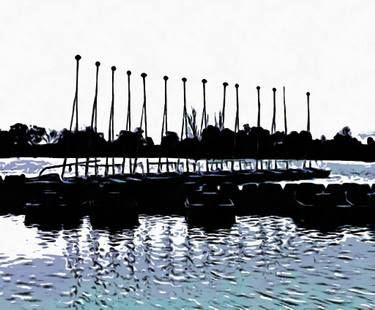
Dusk at the harbour - Print by Saatchiart

Dusk at the harbour - Print by Saatchiart
A view of sailboats at the pier. These sailboats provide a lot of pleasure to the owners, since during the day, going out on the lake with the sailboat is a way of relaxation, to get some time off. But at night, when light on the lake is almost gone, and when winds are very much reduced, and most of the owners would be asleep, these sailboats are all at rest. It gives a nice picture, with the masts, the sails having been brought down, all in a row. The reflection, in the low night, but with the water still a bit wavy, gives a nice picture.
If you like this piece of art, or want to view some of my other creations, please check out my other works on my Saatchiart store (link).

Want to improve your photos? Buy Photoshop and see how your images come to life. Click to buy.

Want to get tips for improving your photography ? Get Photo Tips from this blog.

Thursday, December 06, 2012

Reflection of the waters of the Red Sea off the shore of Sharm el Sheikh in Egypt

Reflection of the waters of the Red Sea off the shore of Sharm el Sheikh in Egypt

Being in Sharm el Sheikh is very different from the rest of the main places in Egypt (such as the Pyramids, Valley of the Kings, Abu Simbel, etc) in the sense that all these places show the monuments that highlight the prominence and importance of ancient Egypt (especially the power of the pharaohs and the architecture they had created so long back - 35 to 45 centuries back). Most visitors to Egypt come to see these monuments, and most tourist packages also highlight trips to such monuments; there are few such trips that tourists take to go visit Sharm el Sheikh. At the same time, there are a large number of tourists who do know about the attractions of Sharm el Sheikh, such as the temperate weather that does not go into the 40's that other parts of Egypt reach during the summer; the beaches, and most of all, the presence of the large number of marine life, drawn by the coral beaches (now under government protection to ensure that these natural structures do not get impacted in any way) that also provide venues for people to do snorkeling or scuba diving. This photo is a reflection of the Red Sea as seen in the window of one of the yachts that take tourists to the various scuba diving or snorkeling locations.
Sharm El Sheikh (New Millennium Collection: North Africa)
View Larger Map

Want to improve your photos? Buy Photoshop and see how your images come to life. Click to buy.

Want to get tips for improving your photography ? Get Photo Tips from this blog.

Wednesday, April 28, 2010

A more distant view of the beautifully lighted Golden Temple at the far end of the sarovar in Amritsar

A more distant view of the beautifully lighted Golden Temple at the far end of the sarovar in Amritsar
A view of the Golden Temple at night (beautifully lighted up, as visible from the far end of the sarovar surrounding it). The shimmer of the lights of the structure looks beautiful, when seen in the black water of the sarovar. In addition, in this photo, you get to see a lot more of the surrounding structures.

Want to improve your photos? Buy Photoshop and see how your images come to life. Click to buy.

Want to get tips for improving your photography ? Get Photo Tips from this blog.

Tuesday, April 27, 2010

Close up view of the Golden Temple, the sarovar surrounding it, and the causeway with devotees

Close up view of the Golden Temple,  the sarovar surrounding it, and the causway with devotees in Amritsar
A photo of the Golden Temple at night, with a closer view of the central lighted Harmandir Sahib and the causeway over the sarovar (linking it to the outer perimeter). The lights, when combined with the golden color of the structure, look incredibly beautiful. The shimmer of the lights on the water looks incredibly beautiful.

Want to improve your photos? Buy Photoshop and see how your images come to life. Click to buy.

Want to get tips for improving your photography ? Get Photo Tips from this blog.

Monday, April 26, 2010

The Harmandir Sahib in Amritsar at night, with lights reflecting in the holy sarovar surrounding it

The Harmandir Sahib in Amritsar at night, with lights reflecting in the holy sarovar surrounding it
A view of the Golden Temple in Amritsar, in the middle of the sarovar (water tank) surrounding it. There is a causeway linking the temple middle with the outside of the sarovar, and this causeway is used by the devotees to pray at the shrine (and at the Guru Granth Sahib) located at the center. At night, the reflection of the light gives an overall beautiful presence.

Want to improve your photos? Buy Photoshop and see how your images come to life. Click to buy.

Want to get tips for improving your photography ? Get Photo Tips from this blog.

Sunday, April 25, 2010

View of the Golden Temple in Amritsar, located in the middle of the Holy Sarovar

View of the Golden Temple in Amritsar, located in the middle of the Holy Sarovar
This is another view of the Golden Temple in Amritsar, at night, with lights all over. The reflection of the lights in the sarovar makes the photo look incredible. I did not have a tripod, so kept the camera on the ground, used the strap of the camera under the lens for elevation, and then set the camera with a delay in clicking, and then set the photo for around a 20 second exposure.

Want to improve your photos? Buy Photoshop and see how your images come to life. Click to buy.

Want to get tips for improving your photography ? Get Photo Tips from this blog.

Saturday, April 10, 2010

A boat carrying a number of people in the waterways near Alleppey, Kerala

A boat carrying a number of people in the waterways near Alleppey, Kerala
The waterways of Alleppey are the more reliable means of transport, given their wide-spread availability. In this photo, you can see a double decker ferry type of boat carrying a number of people, with greenery on both sides of the waterway.

Want to improve your photos? Buy Photoshop and see how your images come to life. Click to buy.

Want to get tips for improving your photography ? Get Photo Tips from this blog.

Monday, November 26, 2007

Photography from inside the car

Photography from inside the car
I have always been interested in taking photos such as this one. I was travelling in a car in the United Kingdom at night and trying to take a photo from inside the car through the windscreen. What I wanted was to be able to get the street lights, the road, and a faint outline of the magazine lying on the dashboard. I think I succeeded with this photo.

Want to improve your photos? Buy Photoshop and see how your images come to life. Click to buy.

Want to get tips for improving your photography ? Get Photo Tips from this blog.

Wednesday, October 17, 2007

Shimmer on the waters of a lake

Shimmer on the waters of a lake
I like such kinds of photos. They give a feeling of serenity and are best when you are in some tension and need some sort of relaxation. This is a photo of a sunset over a lake in the state of Rajasthan in India.

Want to improve your photos? Buy Photoshop and see how your images come to life. Click to buy.

Want to get tips for improving your photography ? Get Photo Tips from this blog.

Tuesday, October 16, 2007

The tranquil waters of a lake

The tranquil waters of a lake
It was a tiring day, we had taken a long drive to reach Sariska from Delhi, and were on the way back. And then we found out about this lake, just a few kilometers off the main highway, and off we went. Boating on this lake was so peaceful, seemed to take away all the tiredness we felt.

Want to improve your photos? Buy Photoshop and see how your images come to life. Click to buy.

Want to get tips for improving your photography ? Get Photo Tips from this blog.

Thursday, June 14, 2007

Shimmering of the sunset

Sunset over the water
I really like this photo. Taken in the Bay Area, right next to the Golden Gate Bridge, this is a photo of a sunset over the water. I really like images like this one, the sunlight shimmering over the water gives a very good feel.

Want to improve your photos? Buy Photoshop and see how your images come to life. Click to buy.

Want to get tips for improving your photography ? Get Photo Tips from this blog.

Wednesday, June 13, 2007

A view of the Golden Gate Bridge in its full grandeur

View of Golden Gate Bridge in San Francisco
This is a view of the Golden Gate Bridge from a road that leads up a hill next to the Bridge. This is an equisite view, and gives a view of the middle span with utter clarity. It seems to cover the entire Bay ocean flowing under it, and gives an idea of the grandeur of man's creations.
We are actually going on a road that winds up a hill, and this place is actually part of a national park. There are a large number at normal times on this road, and almost all of them are here for this view.

Want to improve your photos? Buy Photoshop and see how your images come to life. Click to buy.

Want to get tips for improving your photography ? Get Photo Tips from this blog.

Tuesday, May 08, 2007

A view of a room lit only by window light

Room lit through windows at Shiva Oasis Behror
This is a room lit only from the light appearing through the windows. I had gone to a resort called the Shiva Oasis in Behror, Rajasthan for the weekend, and in the daytime I saw that the main lobby did not have lights on, only the diffused sunlight from the windows.
This created a good effect. I tried with and without flash, and I think that the above picture without flash gave the best effect.

Want to improve your photos? Buy Photoshop and see how your images come to life. Click to buy.

Want to get tips for improving your photography ? Get Photo Tips from this blog.

Sunday, March 04, 2007

A sunset over the sea

Sunset through clouds
This is yet another photo that I like. I was on a ship travelling between a set of islands (Lakswadeep Islands) to Kerala, and was roaming on the deck at the time of sunset (with a camera of course). I saw this beautiful view of the sunset through clouds, and over water. It was a nice spectacle and I kept on watching it for a period of time.


Want to improve your photos? Buy Photoshop and see how your images come to life. Click to buy.

Want to get tips for improving your photography ? Get Photo Tips from this blog.

Tuesday, December 19, 2006

Inside Outside


I don't know how clearly this image comes out, but I have always been interested in photos of this kind. What I am trying to do is to stand near a lighted window, such that I can see both the outside and a reflection of the inside. This has been difficult to capture well, since either of the 2 views can get blurred, especially if an auto-focus camera is used.
I think this one seems somewhat clear, and you can actually click on the photo to get a bigger view. I will hunt around to see whether I can get another clear image like this one.

Want to improve your photos? Buy Photoshop and see how your images come to life. Click to buy.

Want to get tips for improving your photography ? Get Photo Tips from this blog.

Subscribe to my feed

FeedRSS