Showing posts with label Building. Show all posts

Sunday, April 20, 2025

The Artistic and Abstract Side of Construction

The Artistic and Abstract Side of Construction

 The Artistic and Abstract Side of Construction

This image captures a fascinating and powerful moment from a construction site — a man working high up within a steel lattice structure, possibly during the early phases of constructing a large building. Surrounded by vertical and horizontal steel bars, the worker, dressed in safety gear, becomes both a literal and symbolic part of the framework that will one day become a home, office, or public space.

The photograph offers a deeply abstract visual appeal. The crisscrossed steel rods, intersecting lines, and metallic scaffolding create a geometric tapestry against the open sky. There’s a sense of rhythm in the repetitive structure, yet it’s broken by the human presence — reminding us that every towering building begins with individuals and effort.


The Artistic and Abstract Side of Construction

From an artistic point of view, the grid-like pattern of the steel rods plays with light, space, and shadow. The bare skeletal form of a future building has its own rugged elegance. It's a design in progress, an architectural idea slowly coming to life. People drawn to abstract photography would admire this image for its lines, negative space, contrast between man and machine, and the symmetry formed by repeating elements.


A Glimpse Into Modern Construction

At its core, this image is about construction — the process of turning dreams into reality. Modern buildings, whether residential or commercial, rely heavily on steel-reinforced structures during the early stages. These frameworks form the "skeleton" of the building and are later filled in with concrete, walls, ceilings, windows, and so on.

Here’s a simple breakdown of how buildings typically rise from the ground up:

  1. Planning and Design
    Before a single rod is placed, architects and engineers create blueprints. These include structural calculations to ensure safety and durability.

  2. Foundation Work
    The first visible signs of construction often involve digging and pouring the foundation, which must support the entire building's weight.

  3. Steel Framework Installation
    Steel bars or rebars are arranged to form columns, beams, and slabs. This is what we see in the image — a framework that adds tensile strength to the building.

  4. Concrete Pouring
    Once the steel structure is in place, concrete is poured over and around it. The combination of steel and concrete creates a structure that is both flexible and strong.

  5. Walls and Roofing
    After the main structural elements are in place, walls and roofs are added, and slowly the project takes a recognizable shape.

  6. Interior Work
    Plumbing, electrical wiring, insulation, flooring, and painting follow — transforming the raw structure into a livable space.

  7. Final Touches and Safety Checks
    Once construction is complete, a number of inspections are performed to ensure everything is up to code.


What About the Time Before Steel?

Before modern materials like steel and reinforced concrete were used, buildings were constructed with:

  • Mud bricks

  • Wood

  • Stone masonry

  • Clay and lime mixtures

These materials had limitations in strength and longevity. As a result, buildings in ancient times were often lower and more massive — thick walls compensated for the lack of tensile support. Without the vertical and horizontal flexibility that steel offers, multi-story buildings were rare and more prone to damage during earthquakes or weather events.


Why Steel Became a Game-Changer

Steel brought several revolutions to the construction industry:

  • High strength-to-weight ratio — Strong yet relatively light

  • Durability — Resistant to wear and weather

  • Flexibility — Allows for tall, sleek skyscrapers

  • Speed of Construction — Pre-fabricated parts can be assembled quickly

The iconic city skylines of New York, Dubai, and Tokyo wouldn’t exist without steel.


Building Your Dream Home: A Personal Journey

This image might seem far from a cozy home or apartment — but it is in fact the first step toward that dream. Every modern house or high-rise begins this way — with scaffolding, bars, laborers, and blueprints. From a child's room to a grand kitchen, everything takes root in this raw, metallic phase of steel and sweat.


Safety First: The Role of Workers

The human element in the photo is key. It reminds us that behind every structure are people who risk their lives in dangerous conditions. Construction workers wear safety helmets, harnesses, and brightly colored vests for visibility. Ensuring their well-being is just as crucial as the building itself.


Summary: Why This Image Speaks Volumes

This image may appear like a simple capture of construction activity, but it’s layered with meaning:

  • It is about progress and transformation

  • It symbolizes human effort and engineering precision

  • It appeals to lovers of architecture, design, and abstract art

  • It reminds us of the invisible layers beneath our homes and cities

The steel lattice isn’t just metal — it’s possibility in physical form.


Tags:

#ConstructionArt #SteelFramework #BuildingDreams #ModernArchitecture #AbstractPhotography #Steel #Support 

Want to improve your photos? Buy Photoshop and see how your images come to life. Click to buy.

Want to get tips for improving your photography ? Get Photo Tips from this blog.
Wednesday, November 21, 2018

Preparing for the Formula one in Singapore - Fine Art America

Preparing for the Formula one in Singapore - Fine Art America
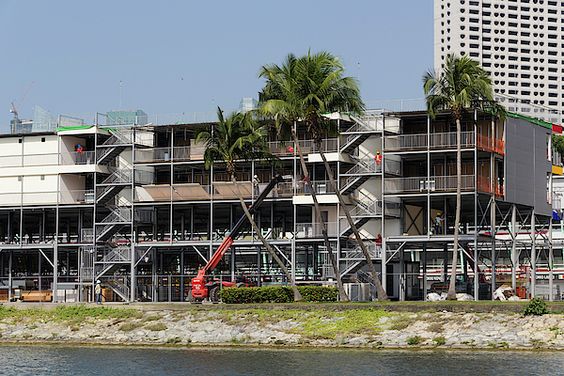
Preparing the various stands for the Formula One race in Singapore. Construction activity is on in full swing. The race takes place in September in the Marina Bay Area, also highlighting many of the other tourist attractions in the same area. The race takes place at night in order to meet the needs of television viewers in the western world. A couple of months before the race, the circuit is prepared, including the strong lighting and the cordoning off of the roads for the formula one race. In this photo, one can see workers at different levels of the stands, with heavy machinery being use for helping out. In the background can be seen a highrise building.
If you like this image and want the image for hanging on your wall, please buy it from my Fine Art America store. Additionally, if you want to look at some of my other images, please check out my other images on the above link.

Want to improve your photos? Buy Photoshop and see how your images come to life. Click to buy.

Want to get tips for improving your photography ? Get Photo Tips from this blog.

Saturday, November 10, 2018

Along the water in Belgium - Saatchiart

Along the water in Belgium
A view of buildings while on a water cruise in Belgium. Going on such cruises provides a way to see all the surroundings near a river or some other water body while not having to move from vehicle to vehicle, or get stuck in traffic. You are in a boat, enjoying the movement on the water stream, along with many other visitors. These buildings look magnificent, with the sloping roofs that are visible for older buildings in the area. The image has been converted into a sort of digital painting, using software tools such as Photoshop and others.
If you want to get a print of this image on the Saatchiart site, click on this link.

Want to improve your photos? Buy Photoshop and see how your images come to life. Click to buy.

Want to get tips for improving your photography ? Get Photo Tips from this blog.

Friday, November 30, 2012

The First Aid center at the pier of Sharm el-Sheikh in the Sinai peninsula of Egypt

The First Aid center at the pier of Sharm el-Sheikh in the Sinai peninsula of Egypt

The pier at Sharm El-Sheikh is a fairly busy place. Given the tourist attractiveness of the place as a center for sun, snorkeling and scuba diving, there are a large number of tourists who visit there. Further, given that there is a certain time period in the day when most tourists go to the pier for their snorkeling and scuba diving, there can be a lot of crowd. Also, there is the potential for people to suffer small injuries or other problems such as a scratch due to the coral (trust me, in a couple of areas, they almost reach the water surface and can be pretty sharp), others can suffer breathing problems if they are doing snorkeling for the first time, and in odd cases, there can be attacks by some fish (for example, a couple of years back, there was an attack by some sharks on tourists in the water).
Sharm El Sheikh (New Millennium Collection: North Africa)
View Larger Map

Want to improve your photos? Buy Photoshop and see how your images come to life. Click to buy.

Want to get tips for improving your photography ? Get Photo Tips from this blog.

Saturday, March 24, 2012

View of path leading from the parking to the Abu Simbel temple

View of path leading from the parking to the Abu Simbel temple
The incredible statue of Abu Simbel is located in the southern half of Egypt, 280 km from the city of Aswan. The temple of Abu Simbel was also very famous because of the movement of the temple to higher ground (through a process whereby all the stones making up the temple were numbered, along with their position, and then moved to a higher ground to make up the same temple).
This photo is that of the path that leads to the actual temple, from the parking (not a very long distance, taking around 10 minutes of walking).

The Mysteries of Abu Simbel: Ramesses II
View Larger Map

Want to improve your photos? Buy Photoshop and see how your images come to life. Click to buy.

Want to get tips for improving your photography ? Get Photo Tips from this blog.

Sunday, February 12, 2012

View of tourists at the base of the pillars of the Hypostyle Hall in the Karnak temple

View of tourists at the base of the pillars of the Hypostyle Hall in the Karnak temple
The sheer size of the pillars at the Hypostyle Hall inside the Karnak temple is immense. If you see this photo, you can see people at the base of the pillars, and the pillars go way up in the area (and used to have a roof a long time back, but now most of the roof has fallen).
The total covered area of the Hypostyle Hall is around 50,000 square feet, and there are a total of 134 such pillars, arranged in multiple rows.


View Larger Map

Want to improve your photos? Buy Photoshop and see how your images come to life. Click to buy.

Want to get tips for improving your photography ? Get Photo Tips from this blog.

Wednesday, November 09, 2011

Obelisk and tourists around it, seen from an archway inside the Karnak temple

Obelisk and tourists around it, seen from an archway inside the Karnak temple
The Obelisk is one of the most spectacular constructions inside the Karnak temple in Luxor (along with the pillars of the Hypostyle Hall); specially because the Obelisk seems in such a great condition when you compare this with the rest of the structures around it. The Obelisk remains popular to tourists, as you can see in this photo of a number of tourists surrounding the Obelisk (which is one of the 2 obelisks inside the Karnak temple).
Learn more about places to visit in India. Buy Lonely Planet Guide to India. Click to buy.

Want to improve your photos? Buy Photoshop and see how your images come to life. Click to buy.

Want to get tips for improving your photography ? Get Photo Tips from this blog.

Thursday, November 03, 2011

View of 2 obelisks inside the Karnak temple in Luxor

View of 2 obelisks inside the Karnak temple in Luxor
This was a pretty rare sight. There are almost no other places in the world where you can see 2 such magnificent obelisks in the same location, and here they are in the Karnak temple complex in Luxor. As far as I can remember from my history, both these Obelisks were placed at the entry to the temple by the female pharaoh Hatshepsut, who is also famous for being the most powerful woman ruler for a long time (certainly at her time, there was no other woman ruler in such a position).
Learn more about Egypt. Buy the Lonely Planet Guide. Click to buy.

Want to improve your photos? Buy Photoshop and see how your images come to life. Click to buy.

Want to get tips for improving your photography ? Get Photo Tips from this blog.

Monday, October 31, 2011

Crane in the middle of the structure of the Karnak temple in Luxor

Crane in the middle of the structure of the Karnak temple in Luxor
In many of the previous photos, I have shown parts of the great Karnak temple in Luxor, as well as the crane that is there in the structure. In this photo, you can see how the actual size of the structure is pretty huge, and no photo (except for overhead photos) can really convey the true impression of the size of this temple. It seems remarkable that 35 centuries back, people could have constructed this huge temple, with so many artifacts inside it.
Learn more about Egypt. Buy the Lonely Planet Guide. Click to buy.

Want to improve your photos? Buy Photoshop and see how your images come to life. Click to buy.

Want to get tips for improving your photography ? Get Photo Tips from this blog.

Friday, October 07, 2011

Path inside the Karnak temple, with fallen structures to the side

Path inside the Karnak temple, with fallen structures to the side
This photo actually shows the extent to which a lot of the structures inside the Karnak temple have suffered damage during the many centuries over which this temple has existed. The weather has been most cruel to the temples, with wear and tear, along with other phenomenon such as earthquakes also causing a lot of damage. It is only in the past few decades that there has been a focus on restoration, which has actually improved some aspects of the temple.
Learn more about Egypt. Buy the Lonely Planet Guide. Click to buy.

Want to improve your photos? Buy Photoshop and see how your images come to life. Click to buy.

Want to get tips for improving your photography ? Get Photo Tips from this blog.

Wednesday, October 05, 2011

Statue of a pharaoh and other damaged items inside the Karnak temple

Statue of a pharaoh and other damaged items inside the Karnak temple
The Karnak temple is very old, atleast 35 centuries old. Given that it would have been exposed to so many disturbances over the past (both natural and man made), it can be hard to find anything remaining from that time.
Surprisingly, some of the parts of the temple still remain in good condition, but in this case, the place seems more in ruins, with damage visible everywhere.
Learn more about Egypt. Buy the Lonely Planet Guide. Click to buy.

Want to improve your photos? Buy Photoshop and see how your images come to life. Click to buy.

Want to get tips for improving your photography ? Get Photo Tips from this blog.

Tuesday, October 04, 2011

Structures inside the Karnak temple in Luxor, looks in good shape

Structures inside the Karnak temple in Luxor, looks in good shape
Some of the previous photos shown in this blog of the Karnak temple shows the pillars of the Hypostyle Hall, and many other magnificent structures near the entrance of the temple. This photo shows a different structure, a hall (most likely a set of rooms in the temple). Given that the temple is 35 centuries old, the place still seems in decent shape.
Learn more about Egypt. Buy the Lonely Planet Guide. Click to buy.

Want to improve your photos? Buy Photoshop and see how your images come to life. Click to buy.

Want to get tips for improving your photography ? Get Photo Tips from this blog.

Monday, September 12, 2011

Side section inside the Karnak temple in Luxor with some small pillars

Side section inside the Karnak temple in Luxor with some small pillars
A smaller section inside the Karnak temple in Luxor; this is more of a run down section of the temple, with the stone seemingly having crumbled to some extent. Now of course, the whole temple would have been stabilized to ensure that there is no further decay or crumbling down of the stone. This looks like any other place, with nothing to highlight it in particular or to make it important for tourists.
Learn more about Egypt. Buy the Lonely Planet Guide. Click to buy.

Want to improve your photos? Buy Photoshop and see how your images come to life. Click to buy.

Want to get tips for improving your photography ? Get Photo Tips from this blog.

Wednesday, July 13, 2011

Structures inside the Karnak temple in Luxor in Egypt

Structures inside the Karnak temple in Luxor in Egypt
The Karnak temple in Luxor is a magnificent temple complex, with additions built by a number of pharaohs over the years. For tourists, most of the temple is not open, with only the precint of Amun-Ra being open. For non-experts, there are huge sections of the temple which are not clear, such as this structure inside the temple.
Learn more about Egypt. Buy the Lonely Planet Guide. Click to buy.

Want to improve your photos? Buy Photoshop and see how your images come to life. Click to buy.

Want to get tips for improving your photography ? Get Photo Tips from this blog.

Tuesday, July 12, 2011

View of the front pylon of the Great Karnak temple at Luxor in Egypt

View of the front pylon of the Great Karnak temple at Luxor in Egypt
The Great Karnak temple in Luxor is a magnificent structure, built by a number of pharaohs over the years. Not all the parts of the temple are open for tourists, and it is supposed to take a number of days to cover if you take a careful look at the archaeology and the remains. This photo shows the large structure that is visible to tourists once you enter the complex, and is visible from quite a distance.
Learn more about Egypt. Buy the Lonely Planet Guide. Click to buy.

Want to improve your photos? Buy Photoshop and see how your images come to life. Click to buy.

Want to get tips for improving your photography ? Get Photo Tips from this blog.

Saturday, June 18, 2011

Open space in front of the huge temple complex of Karnak in Luxor

Open space in front of the huge temple complex of Karnak in Luxor
The Karnak temple complex in Luxor is a huge place, with a lot of open space in front of the temple complex. In fact, from the parking area itself, there is a walk of around 5-10 minutes that will take you towards the gates of the temple. In this photo, you get some idea of the open space, but it needs to be seen to be believed.
Learn more about Egypt. Buy the Lonely Planet Guide. Click to buy.

Want to improve your photos? Buy Photoshop and see how your images come to life. Click to buy.

Want to get tips for improving your photography ? Get Photo Tips from this blog.

Thursday, June 09, 2011

View of a section of the Queen Hatshepsut temple where reconstruction artifacts are present

View of a section of the Queen Hatshepsut temple where reconstruction artifacts are present
At the foot of the Queen Hatshepsut temple in Deir El Bahri, there is a large amount of material, looking the same way as the material that makes the structure of the temple. Looks like a huge amount of material, which indicates that the reconstruction effort is fairly large.

Want to improve your photos? Buy Photoshop and see how your images come to life. Click to buy.

Want to get tips for improving your photography ? Get Photo Tips from this blog.

Wednesday, June 08, 2011

Person viewing the ruins of the pillars without a roof at the Hatshepsut mortuary temple in Egypt

Person viewing the ruins of the pillars without a roof at the Hatshepsut mortuary temple in Egypt
A section of the Queen Hatshepsut mortuary temple where the structure has somewhat fallen. There are still pillars on the ground, but the roof above the pillars is no longer present. A tourist was there, taking photos of these pillars.

Want to improve your photos? Buy Photoshop and see how your images come to life. Click to buy.

Want to get tips for improving your photography ? Get Photo Tips from this blog.

Tuesday, June 07, 2011

View of tourists on the upper sections of the Hatshepsut temple, along with the cliffs on top of the temple

View of tourists on the upper sections of the Hatshepsut temple, along with the cliffs on top of the temple
A view of tourists on the top section of the Queen Hatshepsut temple in Deir El Bahri, near Luxor in Egypt. The mortuary temple is split across multiple levels which are accessible through a ramp. In this photo, you can also see the top section of the temple where the serrated view of the limestone cliffs over the temple can also be seen.

Want to improve your photos? Buy Photoshop and see how your images come to life. Click to buy.

Want to get tips for improving your photography ? Get Photo Tips from this blog.

Saturday, June 04, 2011

View from a section of the upper level of the Hatshepsut temple of tourists at the lower level

View from a section of the upper level of the Hatshepsut temple of tourists at the lower level
This is a view from the upper section of the Hatshepsut mortuary temple in Deir El Bahri, near Luxor in Egypt. You can see the ramp to the left side that leads to a higher level, as well as tourists at the lower sections of the temple.
Learn more about Egypt. Buy the Lonely Planet Guide. Click to buy.

Want to improve your photos? Buy Photoshop and see how your images come to life. Click to buy.

Want to get tips for improving your photography ? Get Photo Tips from this blog.

Subscribe to my feed

FeedRSS