Showing posts with label Grass. Show all posts

Friday, November 23, 2018

Tranquil Green Space Near Resort: Wooden Benches, Trash Can, and Lush Lawn - Fine Art America
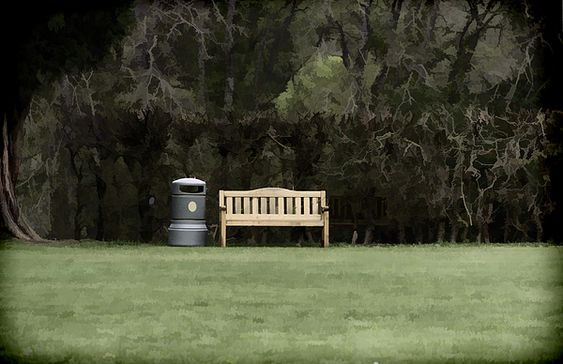
Explore a serene grassy area adjacent to a resort, featuring wooden benches, a conveniently placed trash can, and a vibrant green lawn. This peaceful setting is perfect for relaxation and reflection. If you're interested in prints or merchandise featuring this image, visit my Fine Art America store to browse and purchase.

Nestled near a charming resort, this small grassy enclave offers a peaceful retreat for visitors seeking a moment of relaxation. The area is bordered by a row of modest trees, providing a natural boundary that enhances the sense of seclusion. These trees, while not towering, contribute to the area's tranquil ambiance and offer a gentle canopy that filters sunlight, creating dappled patterns on the ground.

At the edge of this tree line stands a practical yet unobtrusive trash can. Its placement is thoughtful, ensuring that visitors can easily dispose of any waste, thereby maintaining the cleanliness and appeal of the space. Adjacent to the trash can is a sturdy wooden bench, inviting guests to sit and enjoy the surroundings. The bench's design complements the natural setting, and its positioning allows for an unobstructed view of the lush lawn that stretches out before it.

Interestingly, behind this bench and just beyond the row of trees, there's another wooden bench. Although partially obscured by the foliage, its presence suggests a mirrored design, offering additional seating options for those who prefer a more shaded spot. This arrangement not only maximizes the use of space but also provides varied perspectives of the verdant lawn.

The lawn itself is a highlight of this setting. Its rich green grass is meticulously maintained, offering a soft carpet that contrasts beautifully with the wooden elements and the earthy tones of the trees. This vibrant expanse serves as a visual centerpiece, drawing the eye and inviting visitors to linger.

Such thoughtfully designed outdoor spaces are essential in resort settings. They provide guests with areas to unwind, reflect, and connect with nature. The combination of functional elements like benches and trash cans with the natural beauty of trees and grass creates a harmonious environment that caters to both comfort and aesthetics.

For those who appreciate this serene scene and wish to bring a piece of it into their homes or share it with others, prints and merchandise featuring this image are available. From wall art to household items like clocks and napkins, these products capture the essence of this tranquil setting. Visit my Fine Art America store to explore the collection and find the perfect item that resonates with you.

Want to improve your photos? Buy Photoshop and see how your images come to life. Click to buy.

Want to get tips for improving your photography ? Get Photo Tips from this blog.
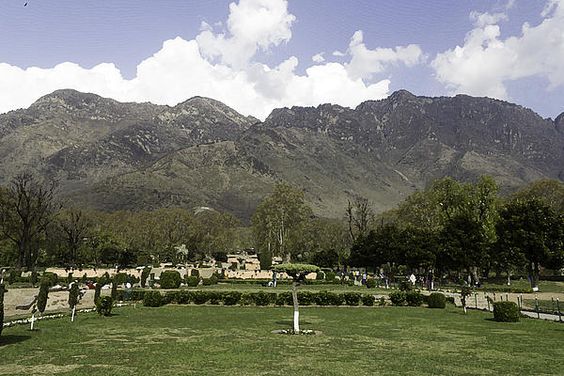
Shalimar Bagh, Srinagar: A Timeless Mughal Garden Overlooking Dal Lake - Prints on Fine Art America

Introduction

Nestled on the northeastern shores of Dal Lake in Srinagar, Jammu and Kashmir, Shalimar Bagh stands as a testament to Mughal horticultural prowess and romantic expression. Commissioned in 1619 by Emperor Jahangir for his beloved wife, Empress Nur Jahan, this garden, also known as Farah Baksh ("The Delightful"), embodies the essence of Persian garden design adapted to the unique topography of Kashmir.

Historical Background

While the site of Shalimar Bagh has ancient roots, with references to a garden built by King Pravarsena II in the 2nd century, it was Emperor Jahangir who transformed it into the magnificent garden we see today. In 1619, captivated by Kashmir's beauty, Jahangir expanded the existing garden to create a royal retreat for Empress Nur Jahan. Later, in 1630, under Emperor Shah Jahan's reign, the garden was further extended by Governor Zafar Khan and renamed Faiz Baksh ("The Bountiful") .

Architectural Layout

Shalimar Bagh spans approximately 31 acres and is structured into three distinct terraces, each serving a specific purpose:

Diwan-e-Aam (Public Audience Hall): The lowest terrace, accessible to the public, features a black marble throne set against a backdrop of cascading water.

Diwan-e-Khas (Private Audience Hall): The middle terrace, reserved for the emperor's private gatherings, showcases intricate stone pavilions and a central water channel lined with fountains.

Zenana Garden (Ladies' Garden): The uppermost terrace, secluded and serene, was designated for the royal women. It houses the famed black pavilion surrounded by a pool and features niches (chini khanas) that once held oil lamps, illuminating the waterfalls at night .

A central canal, known as the Shah Nahar, flows through the garden, connecting all three terraces and eventually merging with Dal Lake. This waterway, adorned with numerous fountains, enhances the garden's tranquility and reflects the Mughal emphasis on symmetry and aesthetics.

Botanical Highlights

Shalimar Bagh is renowned for its lush greenery and diverse flora. The garden is adorned with majestic chinar trees, known for their vibrant foliage that changes with the seasons. In spring, the garden bursts into a riot of colors with blooming flowers, while autumn paints the landscape in hues of red and gold. The meticulously maintained lawns, flowerbeds, and tree-lined pathways offer visitors a serene environment to relax and rejuvenate.

Cultural Significance

Beyond its architectural and botanical beauty, Shalimar Bagh holds cultural and historical importance. It served as the royal court during the Mughal era, where emperors held court sessions and entertained guests. The garden's design reflects the Mughal philosophy of creating paradise on earth, blending natural beauty with architectural elegance. Today, it stands as a symbol of Kashmir's rich heritage and continues to attract tourists, historians, and nature enthusiasts alike.

Visiting Shalimar Bagh

Location: Northeastern shore of Dal Lake, Srinagar, Jammu and Kashmir, India.

Timings: Open daily from 9:00 AM to 7:00 PM (timings may vary seasonally).

Entry Fee: A nominal fee is charged for entry; photography is usually permitted without additional charges.

Best Time to Visit: Spring (March to May) and Autumn (September to November) are ideal for witnessing the garden's floral beauty and vibrant foliage.

Accessibility: The garden is easily accessible by road and is approximately 15 kilometers from Srinagar city center.

Nearby Attractions

  • Nishat Bagh: Another exquisite Mughal garden located nearby, known for its twelve terraces and panoramic views of Dal Lake.

  • Chashme Shahi: A smaller Mughal garden famous for its natural spring and terraced lawns.

  • Pari Mahal: A historic monument offering a blend of Islamic architecture and breathtaking views of Srinagar.

  • Dal Lake: The iconic lake offers shikara rides, houseboat stays, and picturesque views, enhancing the overall experience of visiting Shalimar Bagh.

Bringing Shalimar Bagh Home

If you're captivated by the beauty of Shalimar Bagh and wish to bring a piece of it into your home, consider purchasing prints or merchandise featuring images of the garden. These items, available on platforms like Fine Art America, include wall art, home décor, and accessories that celebrate the garden's timeless elegance.

If you like this image and want a print of this wonderful garden, please buy from my Fine Art America store, and also check out my other images / art.

Want to improve your photos? Buy Photoshop and see how your images come to life. Click to buy.

Want to get tips for improving your photography ? Get Photo Tips from this blog.

Wednesday, November 21, 2018

Playing pen for children - Prints on Fine Art America

Playing pen for children - Prints on Fine Art America
A playing pen for children in the small back garden of a resort, with the white posts of a fence visible in the background. These are simple equipment that can be set into any level place, such as in this case where a small green area with grass can be suitable for setting up such an equipment. So there is a small square where balls and other playing stuff can be added along with toddlers who can fit into the square. In addition, you have a small swing for small children, and a small slide from a raised area where children can congregate and slide down.
If you want a print of this image, you can get it from Fine Art America (link), and if you want to see more of my images, please check out this link.

Want to improve your photos? Buy Photoshop and see how your images come to life. Click to buy.

Want to get tips for improving your photography ? Get Photo Tips from this blog.

Tuesday, November 13, 2018

Rhino in Blair Drummond Safari Park in Scotland - close encounter

Rhino in Blair Drummond Safari Park in Scotland - close encounter
A rhino in close up at the Blair Drummond Safari park near Stirling in Scotland. The park provides close encounters with many animals, including a safari setting where you can drive through the enclosure of many large wild animals, such as the rhino one. This rhino is inspecting us at fairly close range, but we passed safely by. #blairdrummond#blairdrummondSP. There are lions, tigers, and many other animals through whose enclosure we can pass.

For looking at all the Safaris in Africe, here is a list Fodor's the Complete Guide to African Safarishttps://amzn.to/2T7a4YR

Want to improve your photos? Buy Photoshop and see how your images come to life. Click to buy.

Want to get tips for improving your photography ? Get Photo Tips from this blog.
Sunday, September 14, 2014

Urquhart Castle - A beautiful castle on the shore of Loch Ness in Scotland

Scotland is famous for many castles, spread all over. There were a number of clans spread over the region, and there were a number of battles in the medieval ages for supremacy and power. One of the major castles (besides the major ones such as Stirling Castle and Edinburgh Castle) was Urquhart Castle, located on the shore of Loch Ness. The castle is now in ruins, but the spread is still very beautiful, with the castle and the backdrop of Loch Ness, mountains in the distance and incredible greenery near the castle. The castle is located right next to the highway, making for easy access; and with a proper visitor center, it is a delight to go to.

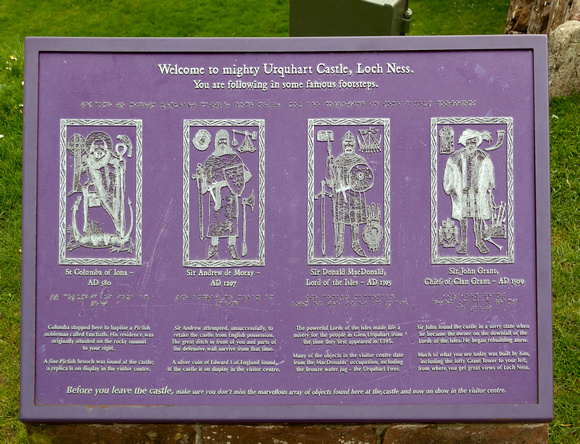
The plaque highlighting some influential people at Urquhart Castle in Scotland
The plaque highlighting some influential people at Urquhart Castle in Scotland (More photos / Prints)
This is a plaque at the visitor center at Urquhart Castle. The plaque highlights some of the critical people who are important and influential and who have been here - namely, St Columba of Iona, Sir Andrew De Moray, Sir Donald MacDonald, and Sir John Grant (chief of Clan Grant).


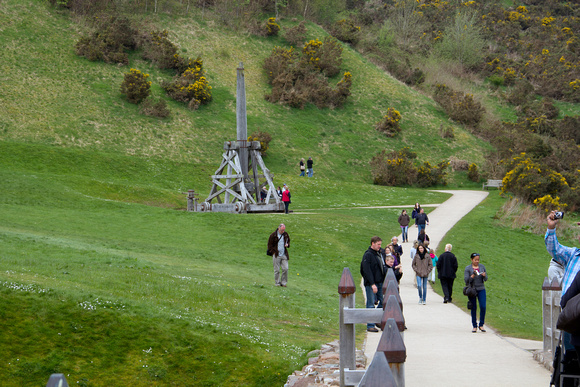
Replica of wooden trebuchet at Urquhart Castle, on the path
Replica of wooden trebuchet at Urquhart Castle, on the path (More photos / Prints)
A trebuchet was one of the most powerful siege weapons, used by attacking armies against castles. The trebuchet could throw all kinds of projectiles over castle walls as well as attack castle walls (along with the catapult); one of the more horrific uses was in terms of throwing diseased bodies over the walls with the intention of causing disease among the defenders.

Want to improve your photos? Buy Photoshop and see how your images come to life. Click to buy.

Want to get tips for improving your photography ? Get Photo Tips from this blog.
Monday, September 01, 2014

Photos from Urquhart Castle (along Loch Ness)

Urquhart Castle is a fabulously beautiful castle located on the shore of the Loch Ness, close to Inverness in Scotland. The castle is essentially ruins now, but its location, and the incredible greenery all around the castle is superb. It is located on the A82 and is very accessible. Right next to the castle, one can get boat rides of Loch Ness, and the whole experience is superb. The castle was in prominence from the 13th to the 16th centuries, and was destroyed in 1692 to prevent its use during rebellions.


View of Urquhart Castle and the path leading to it
View of Urquhart Castle and the path leading to it (More photos at this link)
This is the approach to the ruins of the castle from the road and the visitor center. The place is incredibly beautiful and with the great Loch Ness right next to it, it can look pretty romantic.


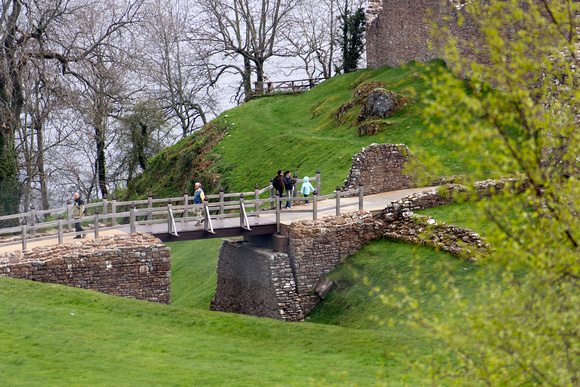
Tourists on a stone bridge crossing the moat at Urquhart Castle
Tourists on a stone bridge crossing the moat at Urquhart Castle  (See more photos at this link)
This is a small bridge. It is over a moat that no longer exists of course, and it is speculated that the moat was built in the middle ages, but there is really no correct dating of when the moat was made. This bridge has to be crossed by every visitor who comes to see the castle.

Want to improve your photos? Buy Photoshop and see how your images come to life. Click to buy.

Want to get tips for improving your photography ? Get Photo Tips from this blog.

Thursday, October 24, 2013

Stirling Castle located at a height - very significant in medieval times

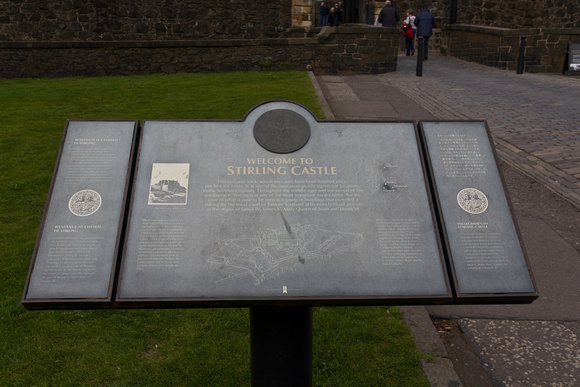
The welcome plaque for the Stirling Castle at the entrance of the Castle
The welcome plaque for the Stirling Castle at the entrance of the Castle (More photos here)
The plaque near the entrance of the Stirling Castle. Stirling Castle is one of the most famous castles in Scotland, and along with the Edinburgh Castle, played a very strategic role in the medieval ages when there were constant skirmishes between the English and Scotsmen over their independence. In fact, one of the most famous battles during this fight happened nearby, where a contingent of Scots being led by 'Braveheart' William Wallace defeated an English army in the nearby battle of Stirling Bridge. The Castle is located on a height, a natural volcanic height, and has a commanding position over the entire surroundings.


Houses and meadows as seen from the height of the Stirling Castle
Houses and meadows as seen from the height of the Stirling Castle (More photos at this link)
A view of the surrounding scenery and houses, showing the height at which the Castle is located. Of course, given that it is an important tourist attraction for anybody who comes to Stirling or even to Scotland, there is a very good road connectivity to the Castle. In the distance is rolling countryside, with farms and trees. It looks tremendously beautiful, especially on days when there is very clear visibility for long distances all around.

Print available for this image, in the form a Digital Oil Painting at Fine Art America.


Statue of Robert Bruce and the structure of Stirling Castle on the hill
Statue of Robert Bruce and the structure of Stirling Castle on the hill (More photos at this link)
Robert Bruce was one of the leaders who was involved in the constant battle against the English rulers who were attempting to control Scotland. He was from one of the high families in Scotland, and had collaborated with the English at one point of time and fought with them at another point of time. Eventually, when the English were routed from there, he took over as the ruler of Scotland, and his statue is located near the entrance of Stirling Castle. The photo shows the high walls of the castle, and the yellow building in the rear is the refurbished and restored Great Hall inside the castle.

Want to improve your photos? Buy Photoshop and see how your images come to life. Click to buy.

Want to get tips for improving your photography ? Get Photo Tips from this blog.
Friday, March 23, 2012

Trees and greenery to one side of the Abu Simbel temple in South Egypt

Trees and greenery to one side of the Abu Simbel temple in South Egypt
The view that you get when you see the Abu Simbel temple is of some magnificent statues; but you do also see a lot of barren land, very little vegetation, and so on. Right next to the Abu Simbel temple is also present the waters of Lake Nasser.
Surprisingly for the landscape, to one side of the temple is also a lot of greenery and trees, and when you see them there, it is pretty surprising. You also see the water of Lake Nasser, with sand also present there.
The Mysteries of Abu Simbel: Ramesses II
View Larger Map


night acrylic prints night canvas prints

Want to improve your photos? Buy Photoshop and see how your images come to life. Click to buy.

Want to get tips for improving your photography ? Get Photo Tips from this blog.
Subscribe to my feed

FeedRSS