Showing posts with label Bridge. Show all posts

Tuesday, May 13, 2025

Bridges in the Mist: Narrow Crossings Over a Seasonal Mountain River

Bridges in the Mist: Narrow Crossings Over a Seasonal Mountain River

 Bridges in the Mist: Narrow Crossings Over a Seasonal Mountain River

A Tale of Two Bridges: Crossing the Seasonal Stream

There is something uniquely poetic about bridges. More than just functional structures, they represent passage, progress, and connection. In this image, we witness a pair of narrow bridges stretching across a modest seasonal river, quietly embedded in a lush, hilly landscape. At first glance, the picture might seem ordinary—a pair of crossings over a stream. But for those who pause to observe more deeply, this scene is rich with meaning, history, and subtle beauty.

Nestled amidst dense greenery and soft undulating hills, the setting brings a serene calm. The bridges—one a metallic truss structure designed for vehicles and another a more rustic pedestrian path—serve as reminders of the ingenuity it takes to connect people across challenging terrains. The foliage seems to envelop the scene, softening the edges of industrial effort with nature's own intricate designs.

From the top left corner of the image, a stone staircase hints at human activity—perhaps a family venturing to a nearby hamlet or simply crossing to the other side. The people in bright clothing add a hint of scale, reminding us how small humans appear when juxtaposed with the vastness of the landscape.

The Engineering Challenge of Narrow Bridges

Building bridges in hilly terrain is a demanding task. Engineers must navigate not just the geographical challenges of uneven ground and flowing water, but also the ecological balance of the region. Unlike urban environments where machinery and workforce can be deployed en masse, mountain bridges are often crafted through limited accessibility and local labor.

The bridges in the photograph appear narrow—just wide enough for essential travel. These aren’t major commercial crossings. They’re lifelines for the communities who use them, often the only connection between a village and the nearest town. In many mountain regions across the world—from the Himalayas to the Andes—these narrow bridges are built not out of grand ambition, but sheer necessity.

Moreover, the river they span is seasonal. During monsoons or snowmelt, it swells and flows powerfully, requiring that bridges be built high enough and strong enough to withstand the deluge. During dry months, it may dwindle to a trickle. But one never underestimates the potential fury of water flowing down from high hills.

The Beauty of Simplicity in Mountain Infrastructure

These bridges lack grand arches or dramatic towers. Instead, they reflect simplicity, economy, and purpose. Constructed using common materials like steel and concrete, with visible trusses and plain railings, the design is utilitarian but durable. Yet, in the context of their environment, they exude a quiet charm.

There’s a rhythmic symmetry in the metal beams, an understated elegance in the way the bridge spans the ravine. And with the green hills rising in the background and thick foliage framing both ends, the entire scene becomes a portrait of harmony between man-made and natural worlds.

The older pedestrian bridge, likely used by villagers and perhaps even livestock, tells a story of age and time. You can imagine schoolchildren walking across it, or elders pausing midway to rest and gaze down at the water. It may creak underfoot, yet it continues to hold steadfast.

Life Around Narrow Bridges

In mountain towns, such bridges are more than infrastructure. They are community meeting points, resting stops, and even markers of local folklore. Children may play along their rails, couples might pause for quiet conversations, and travelers often stand at the middle to soak in the view. These crossings often connect not just landmasses, but also moments in time—stories passed down from one generation to another.

In many parts of the world, locals recall tales of how bridges were built—community efforts where villagers carried materials on foot, piece by piece, across difficult paths. Some bridges are dedicated to local deities or are believed to be lucky or cursed depending on who you ask. And still today, they endure as humble testaments to resilience and cooperation.

Abstract Beauty: Nature and Steel

From an abstract point of view, this image holds rich contrasts. There’s the softness of the forested hills and the hard geometry of the bridges. The dark metallic greys of the trusses stand out sharply against the lush green backdrop. A seasonal stream winds through—a reminder of change—while the sturdy bridges represent permanence.

This interplay between permanence and impermanence is what gives the image depth. The riverbed may change with the seasons, the vegetation may bloom or wither, but the bridges hold strong. Their function is consistent, but their context shifts subtly every day.

Photographically, the framing is gentle, drawing the eye from the lower corner where the pedestrian bridge starts, up toward the vehicular bridge, and eventually toward the distant staircase. It feels like a visual journey—crossing the water, climbing the hill, disappearing into the trees.

The Global Context: Narrow Bridges Around the World

Across the globe, narrow bridges have served communities in silent yet profound ways. In Bhutan, bamboo footbridges sway above roaring rivers. In Peru, villagers still weave rope bridges by hand each year, preserving ancient Incan traditions. In Japan, narrow railway bridges slice through misty valleys, often seen in poetic art. In Scotland, old stone bridges curve over brooks on winding roads between lochs.

What ties them together is a shared essence—they are built where necessity outweighs luxury, where function determines form, and where beauty arises not from ornamentation but from authenticity.

This image, though modest in its scope, belongs to that global gallery of meaningful crossings. It is at once a local detail and a universal motif.


🌉 Need This Image for Stock or Creative Use?

If you're interested in using this image for stock photography purposes, or as part of a creative project like a printed poster, greeting card, t-shirt, travel brochure, or website background, please feel free to leave a comment on this post or contact me directly. I will get back to you with high-resolution files and terms of commercial usage.

This image is perfect for themes such as:

  • Mountain travel and remote infrastructure

  • Bridges and crossings

  • Abstract contrasts of steel and nature

  • Serenity and solitude in rural design

  • Sustainable living and minimalist engineering

Whether you’re working on a print campaign, a travel blog, or a design series focusing on rural engineering or tranquil landscapes, this image could serve as a powerful visual cue.


Let this image remind you that even the smallest bridges can carry the heaviest stories.

Want to improve your photos? Buy Photoshop and see how your images come to life. Click to buy.

Want to get tips for improving your photography ? Get Photo Tips from this blog.

Wednesday, May 07, 2025

Benjamin Sheares Bridge Singapore: A Modern Marvel of Engineering Grace

Benjamin Sheares Bridge Singapore: A Modern Marvel of Engineering Grace

 Benjamin Sheares Bridge Singapore: A Modern Marvel of Engineering Grace

Pillars of Strength: A Visual and Structural Journey Through the Benjamin Sheares Bridge in Singapore

In this image, we are presented with a striking view from below the Benjamin Sheares Bridge in Singapore, showcasing the massive structural pillars that uphold this vital urban artery. With clean, white, concrete legs rising from the canal below and their sculptural geometry cutting sharp angles against the sky, this picture reveals the aesthetic and functional beauty of modern infrastructure.

Yellow signage fixed to the base of the pillars — one indicating a clearance of 26m and another a 15 km/h speed limit for passing watercraft — offers not just a technical cue but a sense of scale. Far in the distance, the sleek towers of the Singapore skyline peek through, creating a dynamic contrast between industrial strength and metropolitan finesse. On the right side of the image, another series of pillars wrapped in vertical greenery—possibly creepers—add an organic softness to the otherwise stern concrete, demonstrating Singapore’s unique fusion of urban modernity and natural elements.

This is not merely a photo of bridge support. It is a study in the language of architecture, symmetry, urban planning, and sustainability, captured at just the right moment.


The Bridge That Connects More Than Just Land

Named after Benjamin Henry Sheares, the second President of Singapore, the Benjamin Sheares Bridge stands as a tribute to his vision of a developed and connected Singapore. Officially opened in 1981, the bridge quickly became one of the most vital connectors across Marina Bay, stretching from the East Coast Parkway to the city centre. At 1.8 kilometers long, it remains Singapore's longest bridge, soaring above the Kallang Basin and the Marina Reservoir.

What makes this bridge so iconic isn’t just its length or function — it's the seamless integration into Singapore’s cityscape and water systems. It carries not only heavy vehicular traffic but also serves as a part of the Marina Coastal Expressway, one of Singapore's most important expressways.

The elevated design means that vessels can pass below it while city traffic flows uninterrupted above — a critical balance in a city built around its waterways.


Why We Build Big: A Brief History of Monumental Structures

Humans have always built large. From the Pyramids of Egypt to the Roman aqueducts and now to modern feats like the Benjamin Sheares Bridge, monumental structures tell a story of ambition, necessity, and engineering evolution.

Early civilizations constructed large temples and palaces as symbols of power. Later, with the advent of industrialization, bridges, dams, and skyscrapers became symbols of progress and connectivity. In land-scarce regions like Singapore, vertical and infrastructural expansion is not just impressive — it’s essential.

The Benjamin Sheares Bridge is a modern response to an age-old challenge: how do you keep a bustling city connected without disrupting the natural elements around it? The answer lies in elevated roads, reclaimed land, and brilliant civil engineering — and this bridge is a perfect example of all three.


Architecture as Function and Art

Bridges are often overlooked in terms of their beauty, but the Benjamin Sheares Bridge invites admiration. The elegantly interlocking Y-shaped pillars are not just structurally optimized to carry heavy loads; they are aesthetic elements in their own right.

They reflect light differently throughout the day, from golden morning hues to stark midday contrasts and shadowed late evenings. The image captures the midday crispness, with clearly visible shadows beneath the bridge deck and a glimmer of Singapore’s futuristic skyline beyond.

And the pillars do more than support — they speak of purpose. The deliberate spacing, height, and even the natural green creepers that climb up some of them are a nod to Singapore’s broader identity as a “City in a Garden.”


A Sustainable Statement

Singapore is a city that takes its environment seriously. The combination of concrete engineering and lush creeping vegetation on the bridge’s pillars is no accident. These green wrappings not only provide visual relief from the gray — they cool the surface, trap dust, and support urban biodiversity.

The bridge’s construction also accounts for the Marina Reservoir, Singapore’s first reservoir in the city. The height of the bridge, the clarity of space beneath it, and the integration with surrounding water systems show careful environmental and urban planning.


Photography as Abstraction

For lovers of abstract imagery, this picture offers layers of interpretation. The strong verticals and diagonals of the concrete pillars contrast beautifully with the curving waterline and the distant horizontals of skyscrapers. The symmetry is mathematically satisfying, yet the creepers and signs introduce just enough chaos to make the image feel alive.

In the world of design and architecture, images like these are studied for their form, line, texture, and spatial composition. They also make for spectacular wall prints — invoking modernism, strength, and subtle dynamism.


The Role of Bridges in Society

More than just connectors of points A and B, bridges like the Benjamin Sheares are lifelines for cities. They ease congestion, link communities, and enable commerce. But they also become symbols — of resilience, modernity, and progress.

In the case of Singapore, this bridge is both infrastructure and icon. It has featured in the National Day Parade, in countless drone videos of the cityscape, and even in travel posters showcasing Marina Bay.


A Modern Pilgrimage

Anyone visiting Singapore should take a moment to appreciate the Benjamin Sheares Bridge — whether from below during a boat ride or from above while driving into the heart of the city. It’s not just a structure — it’s a statement, a functioning sculpture, and a part of the daily rhythm of the city.

This photo freezes that experience — the stillness of concrete, the movement of water, and the pulse of a city just beyond the frame.


📸 For Licensing, Posters, or Prints

If you would like to use this image for stock purposes, or purchase a high-quality print, poster, or even a greeting card or T-shirt, feel free to leave a comment below. I will get back to you with available sizes, licensing options, and customization requests. This image works wonderfully for architectural themes, urban design projects, or modern living room décor.

Want to improve your photos? Buy Photoshop and see how your images come to life. Click to buy.

Want to get tips for improving your photography ? Get Photo Tips from this blog.
Friday, September 19, 2014

Photos at and near the Eilean Donan Castle in the Scottish Highlands

The Eilean Donan Castle is one of the most beautiful castles in Scotland, and one of the most visited ones. It is an incredibly beautiful castle, although most of the castle that can be seen right now is a reconstruction. The castle was destroyed in 1719 to prevent it being used for rebellion, and was reconstructed in the 20 century along with the bridge. It is now one of the most photographed object in Scotland, and if you search, you will some incredibly beautiful photographs of the castle, especially at night and with water all around. The road leading to the castle moves along the side of a mountain, with a great view. It also means that you can start seeing the castle from a long distance, with great views.


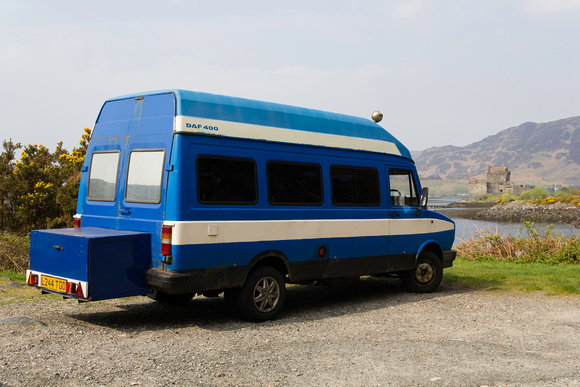
Caravan parked at side of highway near Eilean Donan Castle in Scotland
Caravan parked at side of highway near Eilean Donan Castle in Scotland (More photos)
The road leading to the castle is very beautiful, on the side of the mountain side. As you get closer to the castle, you will be able to see the castle from a distance, since it is on an island, but closer to the shore. This was a small side clearing on the road, enough to be able to park next to the road, and from where you get such a great view of the castle in the distance. If you look in the front of the caravan, you would be able to see the structure of the castle.


Tourists on the bridge coming back from Eilean Donan Castle in Scotland
Tourists on the bridge coming back from Eilean Donan Castle in Scotland (More photos)

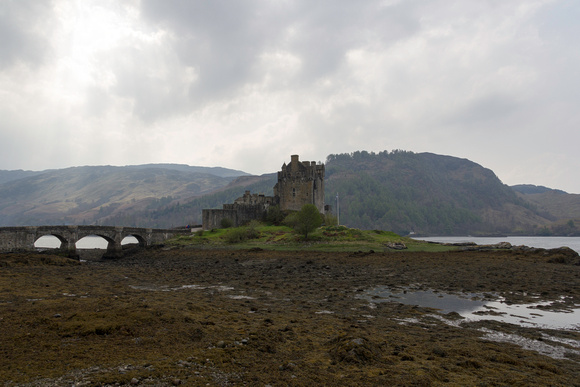
In the previous post, I had put a photo of this bridge but without any people on it. I like this photo better, it shows some people crossing the bridge with one of them pointing to something. It looks more natural to see people crossing the bridge, highlighting the stone structure of the bridge, The water that you see seems to be under the bridge, but it is in the distance, not under the bridge. Far in the distance, on the other side of the Loch, is greenery on the slope of the mountain.

Want to improve your photos? Buy Photoshop and see how your images come to life. Click to buy.

Want to get tips for improving your photography ? Get Photo Tips from this blog.

Thursday, September 18, 2014

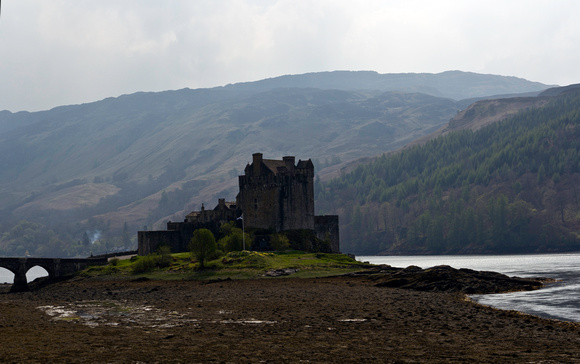
Eilean Donan Castle on the shore of Loch Duich in the Scottish Highlands

The Eilean Donan Castle is a very beautiful castle, located on the shore of Loch Duich. It is actually located on an island, named Eilean Donan, which is located very close to the shore. The castle was part of many protests and fighting over the years, and was finally destroyed many centuries back to prevents its use in rebellions. It was only in the first half of the 20th century that the castle was restored back to the condition in which it is seen today and a bridge was constructed to connect the island to the mainland, and over the years, the castle became a tourist highlight. Right now, the castle is one of the most photographed castles in Scotland and is also among the most visited.

Flag of Scotland in front of the Eilean Donan Castle in the Scottish Highlands
Flag of Scotland in front of the Eilean Donan Castle in the Scottish Highlands (More photos )
This photo shows the Saltire (the Scottish Flag) in front of the Eilean Donan Castle, in a small stretch of green right in front of the castle. The rest of the grounds seems a bit brownish, but this is because this entire stretch of brown is the land that gets covered by water when the water level is high. Right now the water level was so low that even the bridge was over dry land, with no water below it (and when you see photos of the castle, there are times when the water level was much higher). In the background are hills with trees and green cover on the hills.


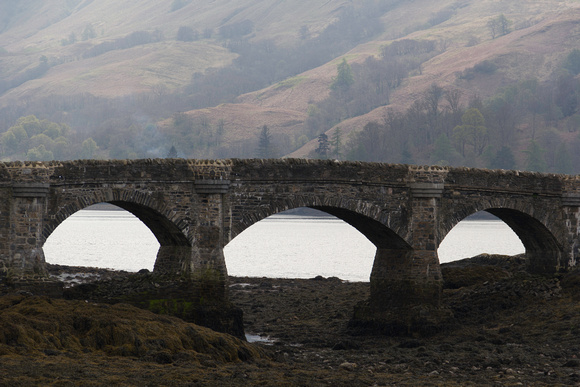
Bridge connecting the Eilean Donan Castle with the mainland
Bridge connecting the Eilean Donan Castle with the mainland (More photos)
The stone bridge connecting the Eilean Donan Castle with the mainland (with the highway pretty close by). At this point of time, the water level was so low that the area under the bridge was totally dry, while at other points of time, the water level was much higher and there was some amount of depth of water under the bridge. The bridge looks real wonderful, looking like typical stone bridges from older times. 

Want to improve your photos? Buy Photoshop and see how your images come to life. Click to buy.

Want to get tips for improving your photography ? Get Photo Tips from this blog.
Sunday, September 14, 2014

Urquhart Castle - A beautiful castle on the shore of Loch Ness in Scotland

Scotland is famous for many castles, spread all over. There were a number of clans spread over the region, and there were a number of battles in the medieval ages for supremacy and power. One of the major castles (besides the major ones such as Stirling Castle and Edinburgh Castle) was Urquhart Castle, located on the shore of Loch Ness. The castle is now in ruins, but the spread is still very beautiful, with the castle and the backdrop of Loch Ness, mountains in the distance and incredible greenery near the castle. The castle is located right next to the highway, making for easy access; and with a proper visitor center, it is a delight to go to.

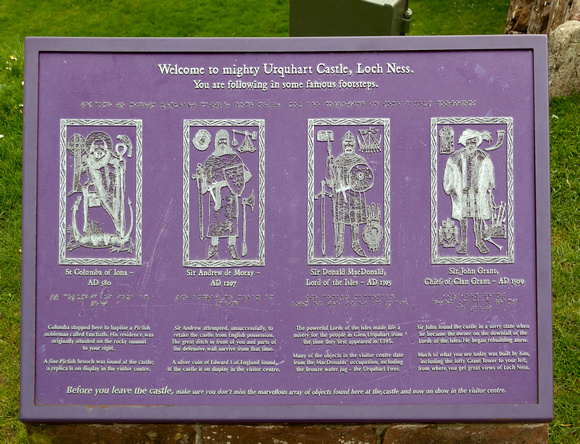
The plaque highlighting some influential people at Urquhart Castle in Scotland
The plaque highlighting some influential people at Urquhart Castle in Scotland (More photos / Prints)
This is a plaque at the visitor center at Urquhart Castle. The plaque highlights some of the critical people who are important and influential and who have been here - namely, St Columba of Iona, Sir Andrew De Moray, Sir Donald MacDonald, and Sir John Grant (chief of Clan Grant).


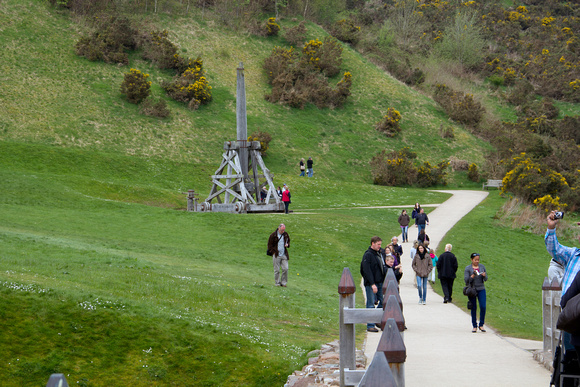
Replica of wooden trebuchet at Urquhart Castle, on the path
Replica of wooden trebuchet at Urquhart Castle, on the path (More photos / Prints)
A trebuchet was one of the most powerful siege weapons, used by attacking armies against castles. The trebuchet could throw all kinds of projectiles over castle walls as well as attack castle walls (along with the catapult); one of the more horrific uses was in terms of throwing diseased bodies over the walls with the intention of causing disease among the defenders.

Want to improve your photos? Buy Photoshop and see how your images come to life. Click to buy.

Want to get tips for improving your photography ? Get Photo Tips from this blog.
Monday, September 01, 2014

Photos from Urquhart Castle (along Loch Ness)

Urquhart Castle is a fabulously beautiful castle located on the shore of the Loch Ness, close to Inverness in Scotland. The castle is essentially ruins now, but its location, and the incredible greenery all around the castle is superb. It is located on the A82 and is very accessible. Right next to the castle, one can get boat rides of Loch Ness, and the whole experience is superb. The castle was in prominence from the 13th to the 16th centuries, and was destroyed in 1692 to prevent its use during rebellions.


View of Urquhart Castle and the path leading to it
View of Urquhart Castle and the path leading to it (More photos at this link)
This is the approach to the ruins of the castle from the road and the visitor center. The place is incredibly beautiful and with the great Loch Ness right next to it, it can look pretty romantic.


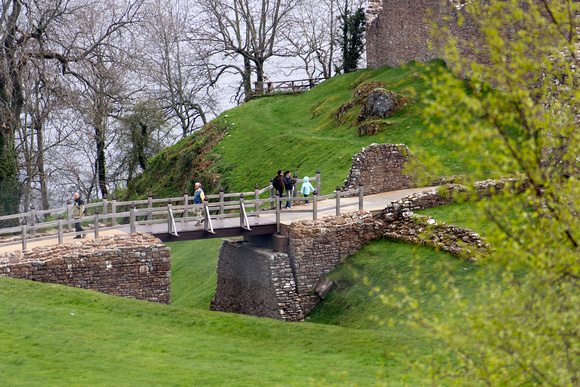
Tourists on a stone bridge crossing the moat at Urquhart Castle
Tourists on a stone bridge crossing the moat at Urquhart Castle  (See more photos at this link)
This is a small bridge. It is over a moat that no longer exists of course, and it is speculated that the moat was built in the middle ages, but there is really no correct dating of when the moat was made. This bridge has to be crossed by every visitor who comes to see the castle.

Want to improve your photos? Buy Photoshop and see how your images come to life. Click to buy.

Want to get tips for improving your photography ? Get Photo Tips from this blog.
Thursday, October 24, 2013

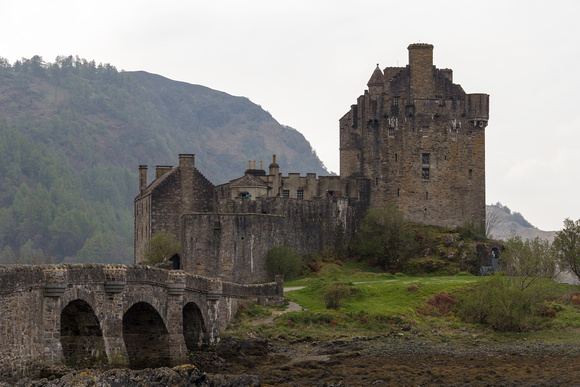
Eilean Donan Castle in the Scottish Highlands - very beautiful castle

Structure of the Eilean Donan Castle with a stone bridge connecting the castle and water nearby
Structure of the Eilean Donan Castle with a stone bridge connecting the castle and water nearby (More photos here)
The Eilean Donan Castle is one of the most beautiful castles in Scotland, located on the shore of Loch Duich in the Scottish Highlands. The castle was part of the history of infighting during the medieval ages, but was then blown up in 1719 to prevent any further fighting using the castle as a base. The current structure of the castle was rebuilt between 1919 and 1932, along with the bridge (seen in the current photo) that connected the islands to the mainland, and now allows a large number of tourists to pay the entry charge and make their way inside the castle. The island is a pretty small castle, and at points, the water level recedes enough that anybody can directly walk to the island.

Get a print of this photo in the form of a Digital Oil Painting at Fine Art America.


Structure of the Eilean Donan Castle with a stone bridge connecting the castle with a thin stream of water
Structure of the Eilean Donan Castle with a stone bridge connecting the castle (more photos here)
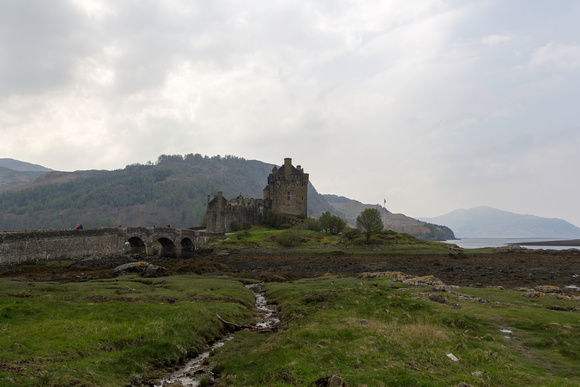
Another view of the beautiful Eilean Donan Castle located on the shore of Loch Duich. There is a small bridge that connects the island to the mainland, and is also the way that tourists can come to visit the island. At this point of time, the water levels are low, and a lot of the surrounding of the castle are uncovered, and the lake bed at this point of time shows that it was under water (visible as the brown surface of the land without any green cover). This very thin channel of water that was visible in this photo, flowing through the greenery was very interesting, since it was just a trickle.

Get a print of this beautiful photo in the form of a Digital Oil Painting on Fine Art America.


Structure of the Eilean Donan Castle with a stone bridge connecting the castle
Structure of the Eilean Donan Castle with a stone bridge connecting the castle (More photos of castle here)
Another close up view of the Eilean Donan Castle in this photo, showing the stone structure of the castle as well as the bridge connecting the castle (and the island on which the castle is located) to the mainland. Way back in 1719, the castle was destroyed to prevent it being the base of any further uprising, and it was only in the early 20th century that the castle was reconstructed along with the bridge in front. Now, this is one of the most famous castles in Scotland and particularly one of the most photographed structures in Scotland.

Get a print of this beautiful structure in the form of a Digital Oil Painting on Fine Art America.

Want to improve your photos? Buy Photoshop and see how your images come to life. Click to buy.

Want to get tips for improving your photography ? Get Photo Tips from this blog.
Saturday, October 19, 2013

Cars and others on the road in scenic conditions - in Scotland

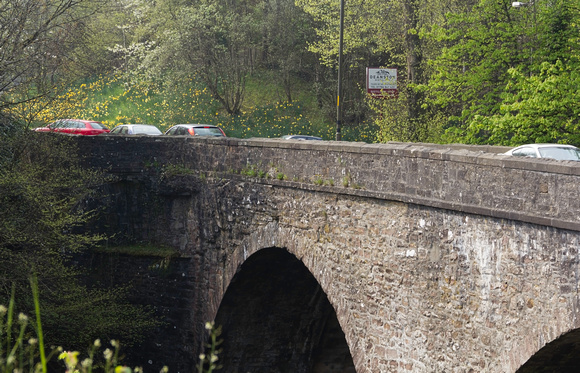
Cars crossing a stone bridge over the River Teith, near the town of Stirling in Scotland
Cars crossing a stone bridge over the River Teith, near the town of Stirling in Scotland (More photos at this link)
An old style bridge located near the town of Stirling in Scotland. The bridge, made of stone, is over the river Teith, and looks very beautiful. It was worth it just to be close to the bridge and take a photo of cars crossing the bridge - although it does seem odd, a combination of old times and modern vehicles. The area all around is very green, with trees, grass and flowers all around. Also, there is the sign for the Deanston distillery which is close by; Scotland is famous for its distilleries and for being the birthplace for Scotch.

Get a print of this photo in the form of a Digital Oil Painting at this link.


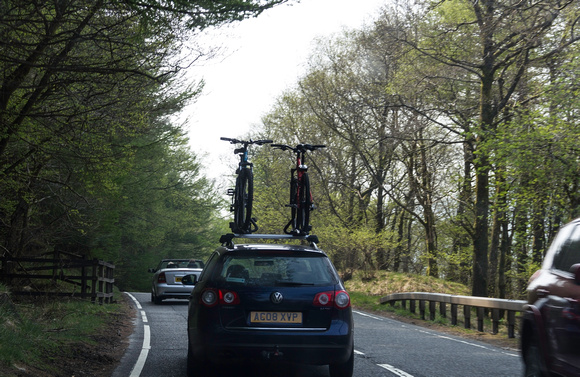
Car on a road in Scotland, with cycles mounted on the top
Car on a road in Scotland, with cycles mounted on the top (More photos at this link)
Cycling is a popular pastime for a number of people. It is a healthy form of exercise, allows you to travel with a group of friends in scenic surroundings. People in the cities love cycling where they can, but the problem is that cycling is best done in locations that are outside the cities. So, the best solution is, when traveling somewhere, take your cycles along with you. It is fairly easy to install this equipment on top of the vehicle to be taken safely wherever you are going. This is located in a scenic highway in Scotland.

Get a print of this photo, in the form of an Oil Painting on FAA.


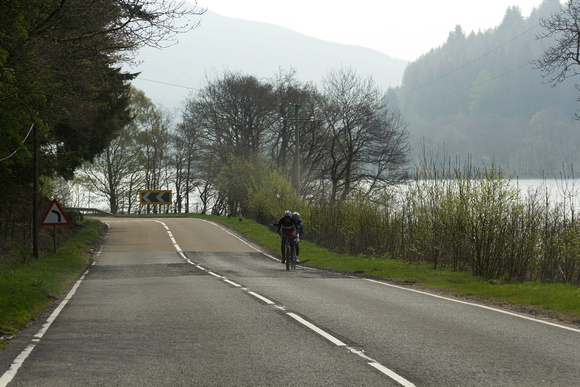
Cyclists on a road in the Scottish Highlands with a lake next to them
Cyclists on a road in the Scottish Highlands with a lake next to them (For more photos, click on this link)
I love this photo. It takes a small highway heading from Edinburgh towards the region of Lochs, hills, towards the Scottish Highlands and takes some cycling enthusiasts as they are cycling on the side of the road. The rest of the road is deserted, but the section of road that is on view is also small, since there is a curve right ahead, with the road curving to meet the contours of the Loch. The hills to the right of the Loch provide the basic definition of what tourists view Scotland - lakes and hills.

Get a print of this photo in the form of a Digital Oil Painting on Fine Art America.

Want to improve your photos? Buy Photoshop and see how your images come to life. Click to buy.

Want to get tips for improving your photography ? Get Photo Tips from this blog.

Sunday, March 28, 2010

A small stone bridge in Kerala, near Alleppey, over a weed infested creek

Photo of A small stone bridge in Kerala, near Alleppey, over a weed infested creek
Looks like a very beautiful location, doesen't it ? Well, yes. We were on a trip through these creeks on a motorboat and came across this functional but obvious old stone bridge over the creek. There is a path on boat sides where people can walk, and there is enough of a waterway between the weeds through which boats can pass. This is in the waterways located in the state of Kerala, in India.

Want to improve your photos? Buy Photoshop and see how your images come to life. Click to buy.

Want to get tips for improving your photography ? Get Photo Tips from this blog.
Friday, January 22, 2010

Small bridge over a stream inside the tourist village of Chokhi Dhani

Photo of Small bridge over a stream inside the tourist village of Chokhi Dhani
Inside the tourist village of Chokhi Dhani, there is a small stream of water that runs to one side, and over it, there is a very small wooden bridge. It is small, and shakes slightly when you walk on it, and can be fun to cross, again with small children, since they would enjoy the small shaking of the bridge.

Want to improve your photos? Buy Photoshop and see how your images come to life. Click to buy.

Want to get tips for improving your photography ? Get Photo Tips from this blog.
Saturday, May 24, 2008

A great view of London Bridge

A great view of London Bridge
London Bridge of the most visually (and seemingly architecturally appealing) out of the Bridges on the Thames in London. It looks beautiful from a distance, and when framed against the blue of a clear sky, the effect seemed great to me.

Want to improve your photos? Buy Photoshop and see how your images come to life. Click to buy.

Want to get tips for improving your photography ? Get Photo Tips from this blog.
Thursday, May 15, 2008

Side view of people crossing the Millenium Bridge

Side view of people crossing the Millenium Bridge
I have come to like this photo after viewing it a few times. It shows people crossing the Millennium Bridge over the Thames in London; but it shows those people almost at the bottom of the photo, almost as an oversight. The rest of the photo deals with the blue sky and streaks of cloud.

Want to improve your photos? Buy Photoshop and see how your images come to life. Click to buy.

Want to get tips for improving your photography ? Get Photo Tips from this blog.
Sunday, May 04, 2008

Passing under the millenium Bridge in London

Passing under the millenium Bridge in London
This is a view of the Millenium Bridge from underneath, in London. This was a controversial project, since it had to be shut down for repairs within 2 days of being opened, since it was swaying a lot; and then re-opened after some time. It is a pure pedestrian bridge.

Want to improve your photos? Buy Photoshop and see how your images come to life. Click to buy.

Want to get tips for improving your photography ? Get Photo Tips from this blog.
The under-side of a Bridge on the Thames

The under-side of a Bridge on the Thames in London
One advantage of going on a ship on the Thames is that you get to travel underneath most of the Bridges and can see how they look. It was a bit hard to take a photo with a normal camera because the ship was traveling at a certain speed and the bridge passed by in a blur, still I gave it my best attempt.

Want to improve your photos? Buy Photoshop and see how your images come to life. Click to buy.

Want to get tips for improving your photography ? Get Photo Tips from this blog.
A close-up of the Hungerford Bridger over the Thames

A close-up of the Hungerford Bridger over the Thames
This is a much closer view of the Hungerford Bridge over the Thames. The entire white structure that can be seen is the support and infrastructure for the pedestrian portion of the Bridge.

Want to improve your photos? Buy Photoshop and see how your images come to life. Click to buy.

Want to get tips for improving your photography ? Get Photo Tips from this blog.
Sunday, April 20, 2008

The Hungerford Bridge over the river Thames in London

The Hungerford Bridge over the river Thames in London
This is a view of one of the 17 bridges over the river Thames in London. The Hungerford Bridge (Wikipedia) is a combination railway and pedestrian Bridge.

Want to improve your photos? Buy Photoshop and see how your images come to life. Click to buy.

Want to get tips for improving your photography ? Get Photo Tips from this blog.

Subscribe to my feed

FeedRSS